
 Real Facts Of Fire Doors India
Fire Doors’ Role in Protecting Lives and Property Today. Fire safety is no longer an optional consideration in modern construction. With growing urban density, complex building designs, and stricter regulations, protecting human life and property has become a top priority. Among all fire safety measures, fire doors play a critical and legally mandatory role in safeguarding modern buildings. They are not just doors; they are life saving barriers designed to contain fire and smoke, allowing safe evacuation and minimizing damage.
This in depth guide explains why fire doors are mandatory for modern building safety, how they work, legal requirements, benefits, common misconceptions, and why ignoring them can have devastating consequences.
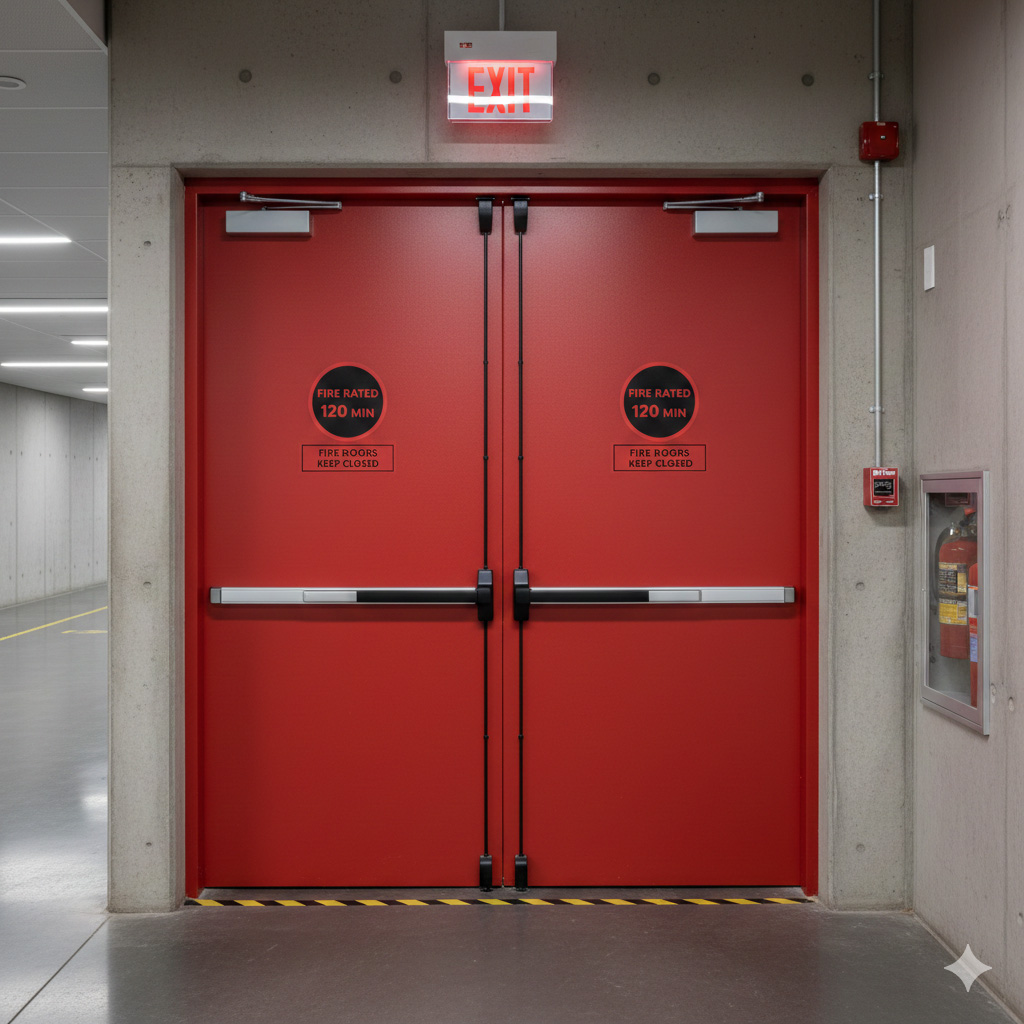
Fire doors are specially engineered doors made from fire resistant materials such as steel, gypsum, vermiculite boards, and fire rated glass. Unlike standard doors, they are designed to withstand fire for a specific period, typically 30, 60, 90, or 120 minutes.
A complete fire door system includes:
Fire rated door leaf
Fire resistant frame
Intumescent seals that expand when heated
Smoke seals to prevent toxic fumes
Certified hinges, locks, and closers
When exposed to high temperatures, the intumescent seals expand and seal gaps, preventing flames and smoke from spreading through compartments of the building.
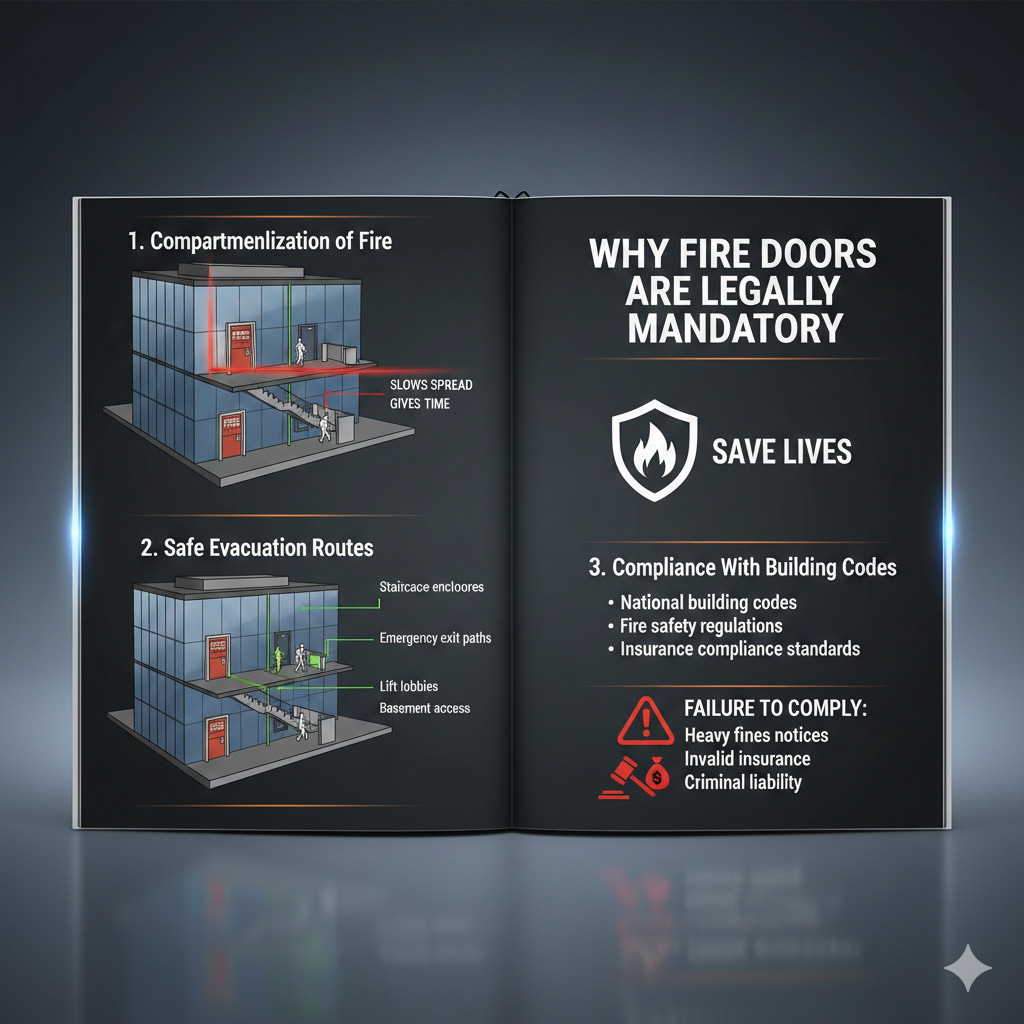
Fire Emergency Doors are mandated by national and international building regulations for one primary reason: they save lives. Modern buildings must comply with fire safety codes to ensure controlled evacuation and effective fire containment.
Modern fire safety relies on compartmentalization. Fire doors divide buildings into fire resistant sections, slowing the spread of fire and smoke. This containment gives occupants crucial time to escape safely.
Fire doors protect stairwells, corridors, and emergency exits. These escape routes must remain smoke free and accessible during a fire, making fire doors mandatory in:
Staircase enclosures
Emergency exit paths
Lift lobbies
Basement access areas
Most countries require fire doors under:
National building codes
Fire safety regulations
Insurance compliance standards
Failure to install certified fire doors can result in heavy fines, closure notices, invalid insurance claims, and criminal liability in case of fatalities.
High rise apartments and housing complexes require fire doors to prevent vertical fire spread and protect sleeping occupants who may not immediately detect a fire.
Offices, malls, and IT parks have high occupancy levels. Fire doors control crowd panic and protect evacuation routes during emergencies.
Fire doors are critical in hospitals where patients cannot self evacuate easily. They allow horizontal evacuation, isolating fire without moving vulnerable individuals.
Schools and universities use fire doors to secure corridors and stairwells, ensuring student safety and orderly evacuation.
Fire doors prevent fires from spreading between production areas, reducing asset loss and operational downtime.
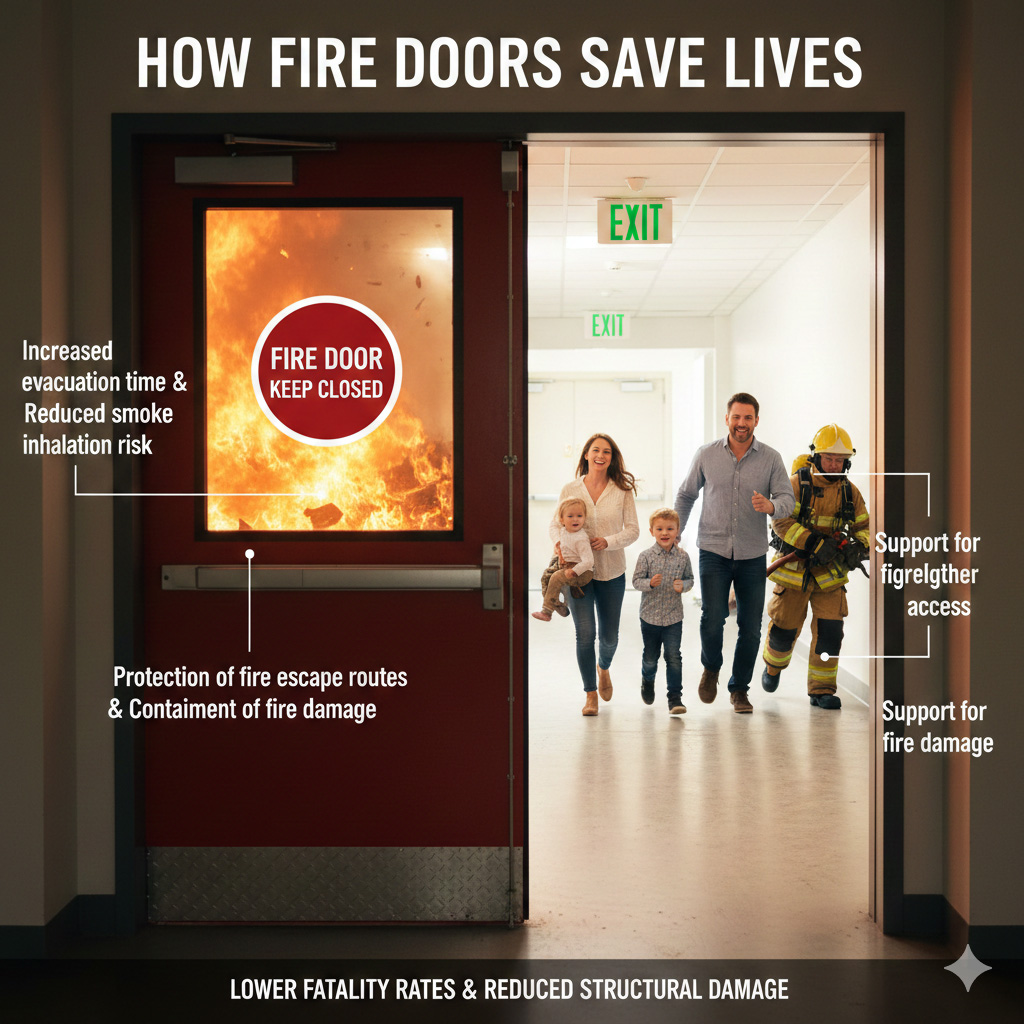
Fire doors significantly reduce the speed at which fire and smoke spread. Smoke inhalation is the leading cause of death in fires, and fire doors help prevent toxic fumes from reaching occupied areas.
Increased evacuation time
Reduced smoke inhalation risk
Protection of fire escape routes
Containment of fire damage
Support for firefighter access
Studies consistently show that buildings with properly installed and maintained fire doors experience lower fatality rates and reduced structural damage.
Insurance companies often require certified fire doors as part of risk assessment. Buildings without compliant fire doors may face:
Rejected insurance claims
Higher premiums
Legal disputes after fire incidents
Installing approved fire doors demonstrates due diligence and reduces financial risk for property owners.
Fire doors are equally important in residential buildings, especially multi story housing.
Modern fire doors are available in wood finish, glass panels, and custom designs that blend seamlessly with interiors.
Fire doors require regular inspections to ensure seals, closers, and hinges function properly.
Even the best fire door fails if installed incorrectly. Proper installation ensures the door closes fully and seals gaps during a fire.
Maintenance checklist includes:
Regular inspection of seals
Ensuring self closing mechanisms work
No unauthorized modifications
Certification labels intact
Annual fire door inspections are strongly recommended.
Ignoring fire door requirements can result in:
Loss of life
Legal penalties
Business shutdowns
Criminal negligence charges
Permanent reputational damage
Authorities increasingly conduct fire audits, making non compliance a serious risk.
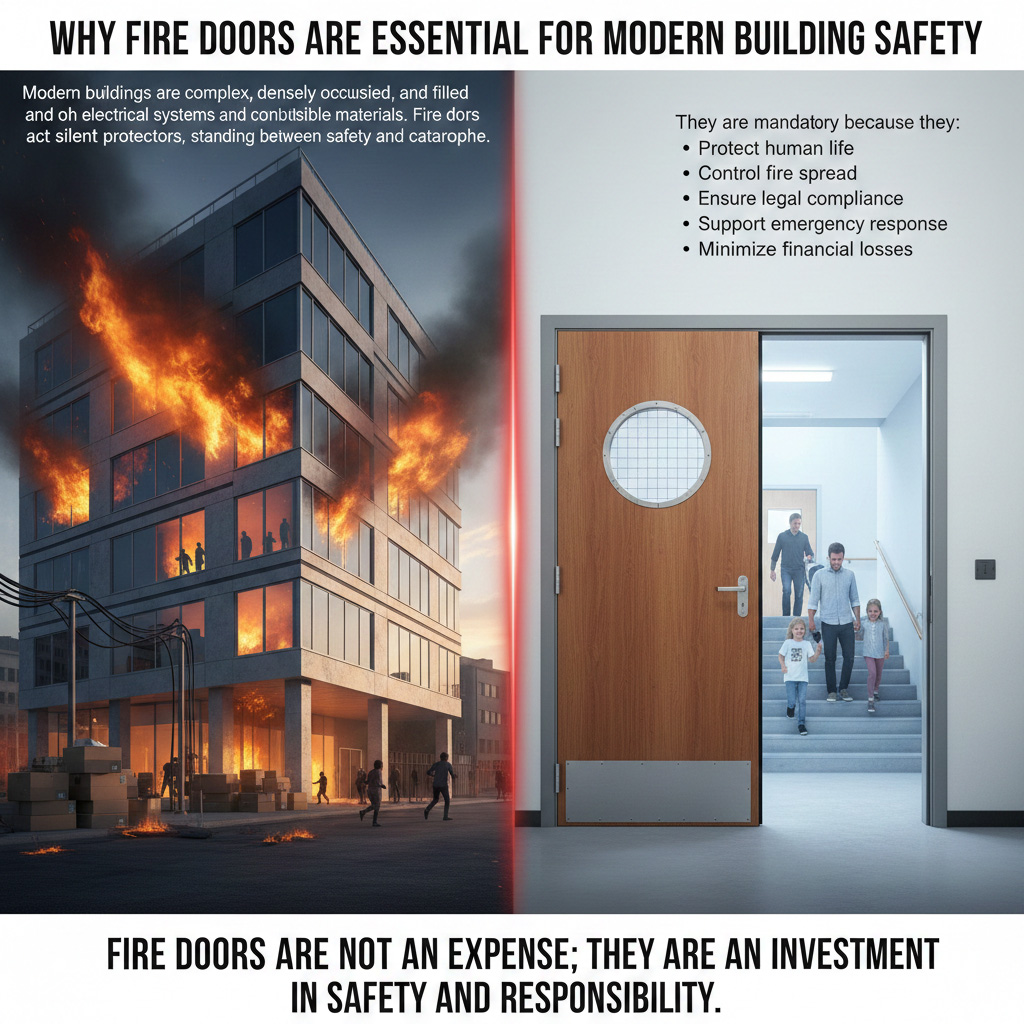
Modern buildings are complex, densely occupied, and filled with electrical systems and combustible materials. Fire doors act as silent protectors, standing between safety and catastrophe.
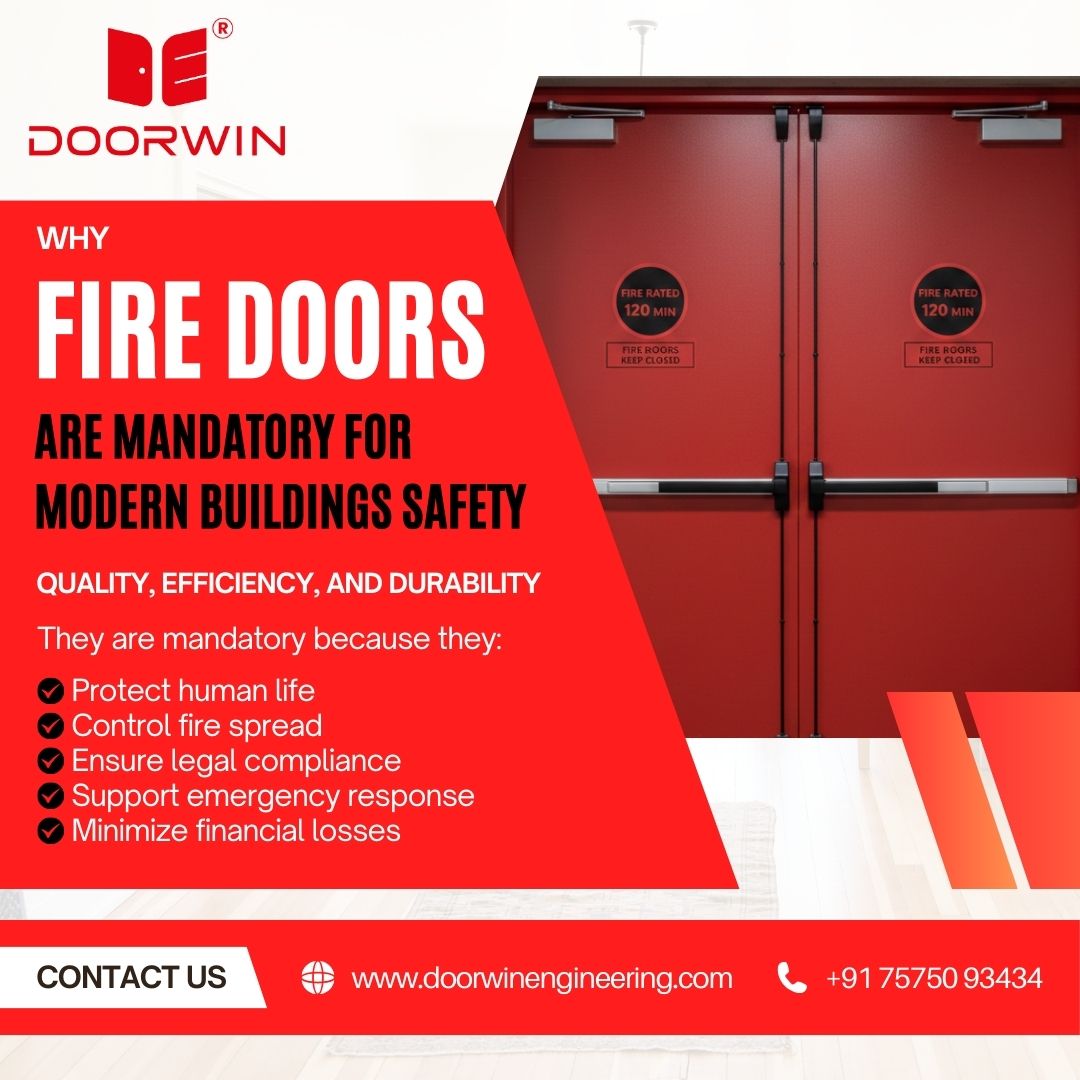
They are mandatory because they:
Protect human life
Control fire spread
Ensure legal compliance
Support emergency response
Minimize financial losses
Fire doors are not an expense; they are an investment in safety and responsibility.
Final Thoughts:Fire Doors are a cornerstone of modern building safety. Their mandatory status is justified by their proven ability to save lives, protect assets, and ensure compliance with fire regulations. Whether residential or commercial, installing certified fire doors is a non-negotiable responsibility for building owners and developers.
Prioritizing fire doors today ensures safer buildings tomorrow.
WhatsApp us
 Fire Doors
Comments are closed