
 Fire Doors That Protect Lives and Property
Fire Resistant Doors play a critical role in modern fire safety systems. Fire Resistant Doors are specially designed to slow down the spread of fire and smoke, protecting lives and property during emergencies. Unlike normal doors, Fire Resistant Doors are engineered to withstand extreme heat for a defined period, making them essential for residential, commercial, and industrial buildings.
Understanding the safety differences between Fire Resistant Doors and normal doors helps building owners make informed decisions that comply with fire safety regulations.
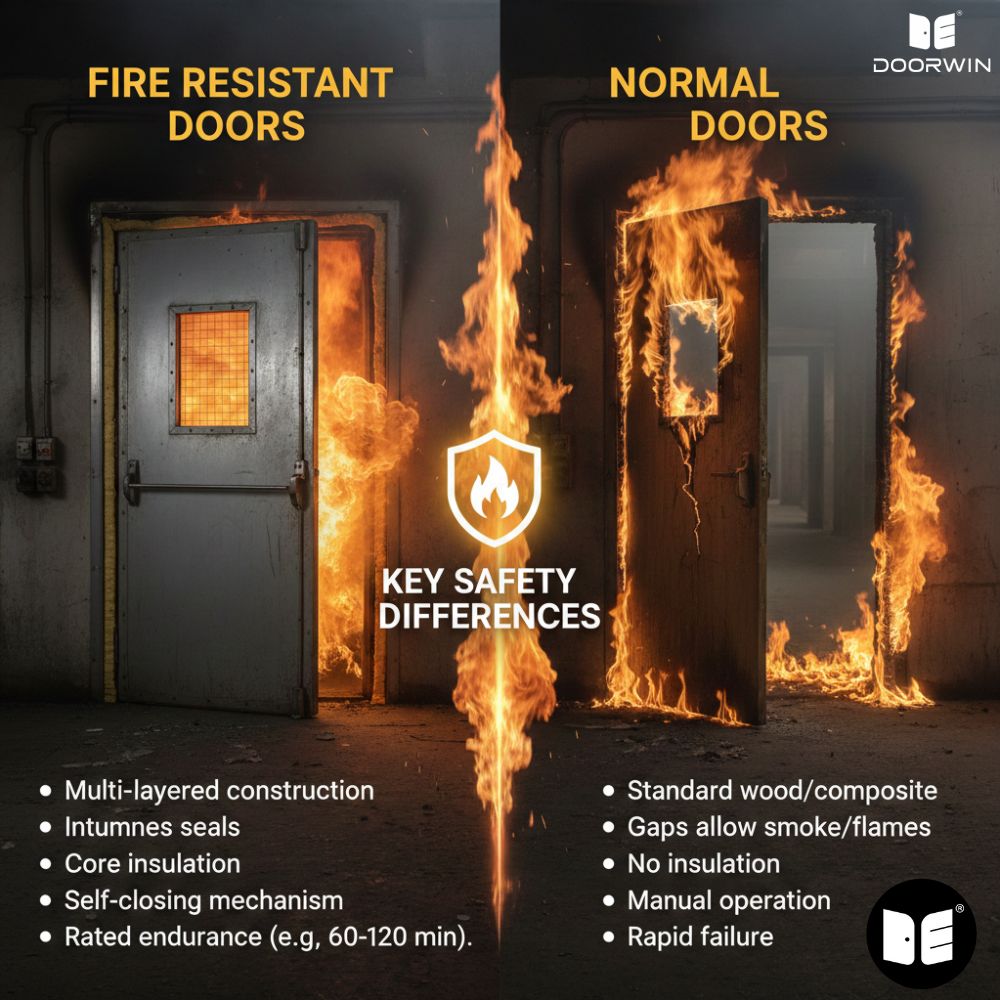
Fire resistant doors are specially engineered safety doors designed to slow down the spread of fire and smoke for a specific period. These doors are tested and manufactured to withstand high temperatures and maintain structural integrity during fire emergencies.
Their primary purpose is to protect escape routes, prevent fire from spreading to other areas, and give occupants valuable time to evacuate safely.
Fire resistant doors are commonly used in high-risk areas such as staircases, corridors, hospitals, factories, power plants, and commercial buildings.
Normal doors are standard doors designed mainly for privacy, access control, and aesthetics. They are not built to resist fire or smoke and can fail quickly during a fire incident.
Most normal doors are made from wood, plywood, MDF, or lightweight metal sheets. While they may look visually appealing, they offer little to no fire protection and can contribute to faster fire spread.
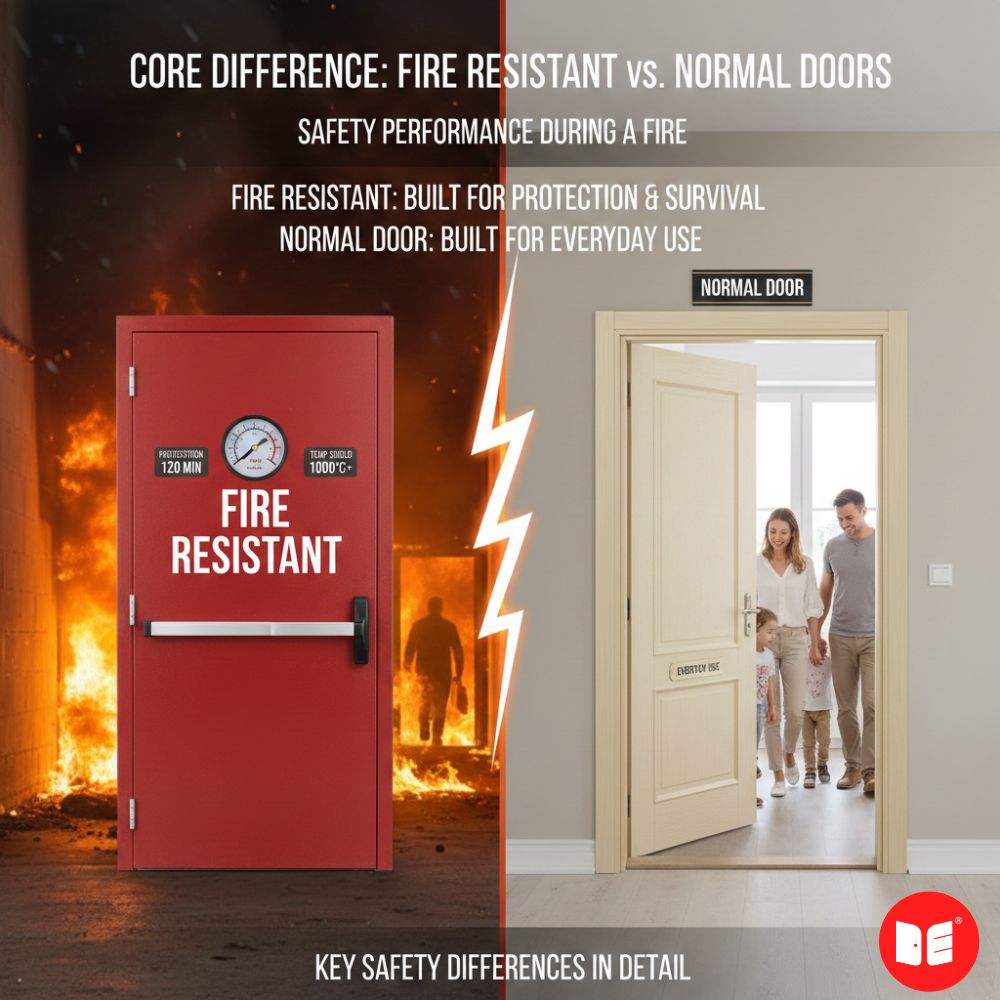
The fundamental difference lies in safety performance during a fire. Fire resistant doors are built for protection and survival, while normal doors are built for everyday use.
Let us break down the key safety differences in detail.
Fire resistant doors are constructed using materials such as steel, galvanized iron, fire-rated cores, and intumescent seals. These materials are selected to withstand extreme heat without collapsing.
Normal doors are typically made from timber, laminated boards, or thin metal sheets. These materials burn, warp, or melt rapidly during fire exposure.
The advanced construction of fire resistant doors ensures strength and stability when it matters the most.
Fire resistant doors are tested to withstand fire for specific durations such as 30 minutes, 60 minutes, 90 minutes, or more depending on safety requirements.
Normal doors have no fire resistance rating. In many cases, they can fail within minutes, allowing flames and smoke to spread rapidly.
This difference alone can mean the difference between life and death in emergency situations.
Smoke inhalation is one of the leading causes of fatalities during fires. Fire resistant doors are designed with smoke seals that block toxic gases and smoke from passing through.
Normal doors do not have smoke-sealing features, allowing smoke to spread freely across rooms and corridors.
By limiting smoke movement, fire resistant doors significantly improve visibility and breathing conditions during evacuation.
Fire resistant doors are built to maintain their shape and strength even under intense heat. They do not warp or collapse easily, keeping escape routes functional.
Normal doors often deform quickly, becoming unusable and blocking exit paths.
Maintaining door integrity is crucial for safe evacuation and rescue operations.
Fire resistant doors are manufactured in accordance with fire safety standards and building regulations. They are mandatory in many commercial, industrial, and public buildings.
Normal doors do not meet fire safety codes and are not suitable for fire-protected zones.
Using fire resistant doors ensures legal compliance and reduces liability risks.
Fire resistant doors are widely used in hospitals, offices, hotels, factories, schools, malls, staircases, and emergency exits.
Normal doors are suitable for low-risk areas such as internal rooms in residential buildings where fire exposure is minimal.
Choosing the correct door type depends on the fire risk level of the area.
Fire resistant doors are designed for long-term performance with minimal maintenance. They offer durability, safety, and peace of mind for decades.
Normal doors may be cheaper initially but often require frequent replacement and offer no safety protection.
From a long-term perspective, fire resistant doors provide better value and safety investment.
Fire resistant doors are more expensive than normal doors due to specialized materials, testing, and manufacturing processes.
However, the cost difference is justified by enhanced safety, compliance, and protection of lives and property.
Normal doors may appear cost-effective, but the risks associated with fire damage far outweigh the initial savings.
Choosing fire resistant doors is not just about compliance. It is about responsibility, safety, and preparedness.
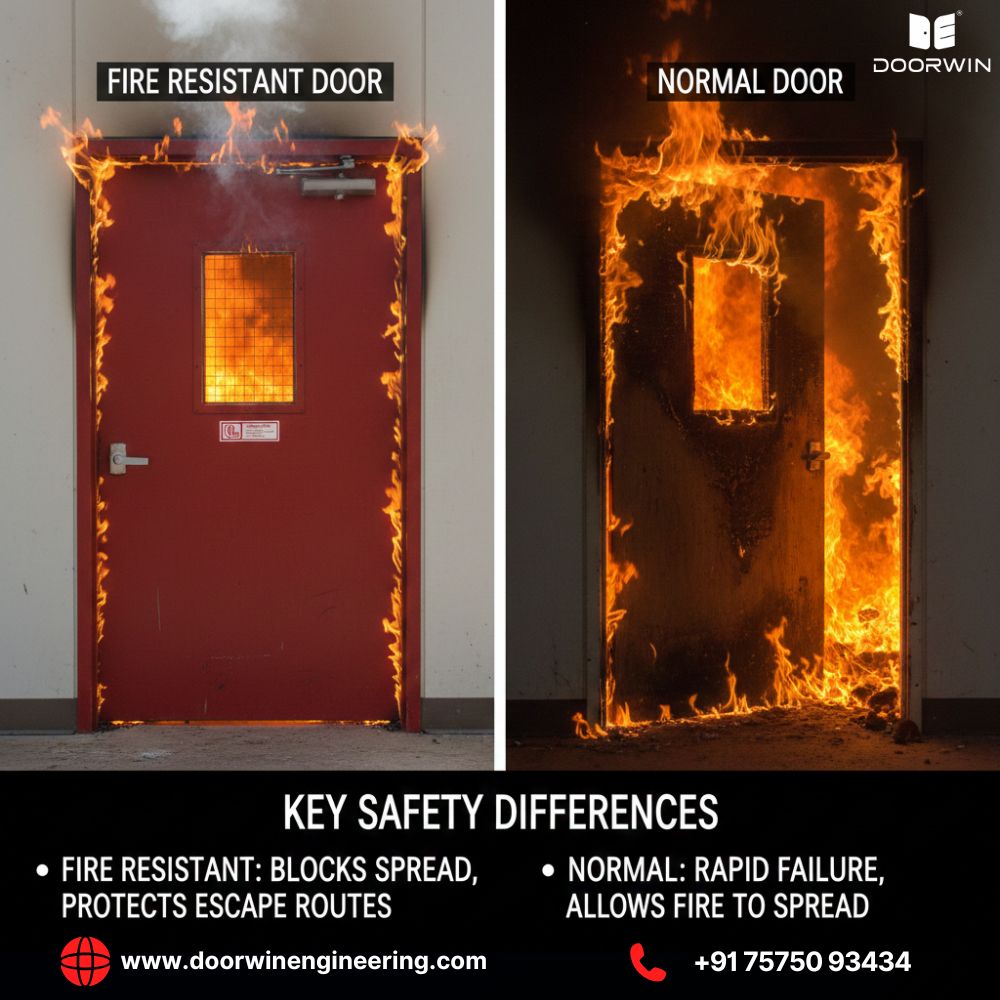
These doors help contain fire, reduce damage, protect occupants, and support rescue operations.
Normal doors simply cannot offer these life-saving benefits.
 Final Thoughts:
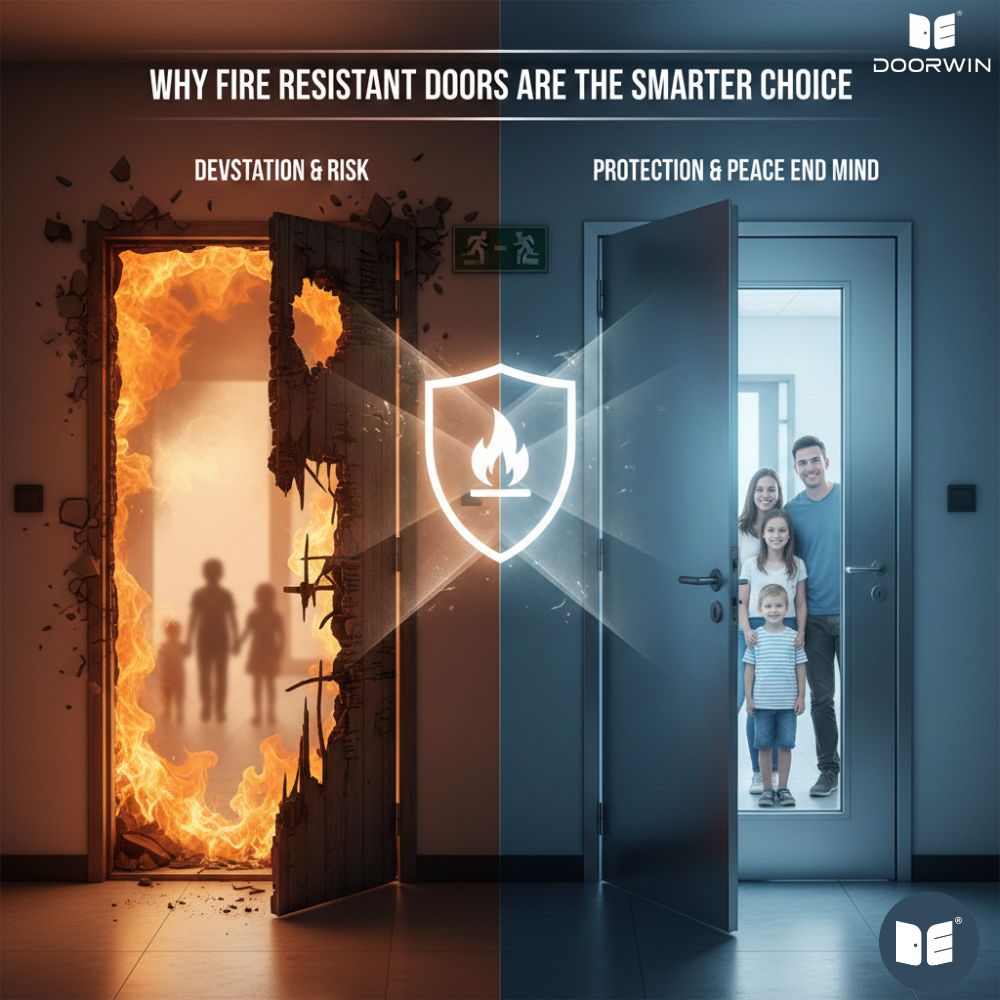
When comparing fire resistant doors vs normal doors, the difference is clear. Fire resistant doors are engineered for safety, durability, and emergency performance, while normal doors are designed only for basic access.
Installing fire resistant doors is a proactive step toward protecting lives, assets, and infrastructure. For any building where safety matters, fire resistant doors are not an option but a necessity.
WhatsApp us
 Fire Resistant Doors
Comments are closed