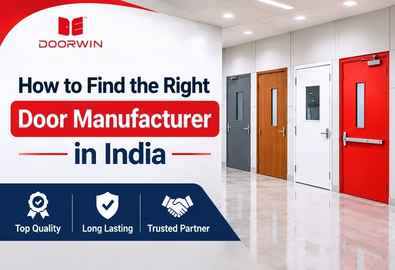
Start by checking the company's manufacturing experience, product range, material specifications, customization capabilities and customer reviews. Also, request relevant technical documents and compare quotations before making your final decision.
Choosing the right doors plays an important role in the safety, functionality and appearance of any building. Whether you are developing an industrial facility, commercial complex, hospital, pharmaceutical unit or residential property, the quality of your doors can influence long-term performance. However, finding a suitable manufacturer requires more than comparing product prices.
India has a growing construction and infrastructure sector. As a result, businesses and property developers need door solutions that meet different architectural, operational and safety requirements. From fire-resistant doors to acoustic doors, clean room doors and industrial steel doors, every application demands specific features.
A professional Door Manufacturer understands these requirements and helps customers select suitable products according to their project needs. Moreover, an experienced manufacturer can provide customized dimensions, appropriate materials, technical guidance and dependable project support.
But how can you identify the right manufacturing partner among so many available options?
The answer lies in evaluating product expertise, manufacturing capabilities, material quality, customization options, safety standards and customer support. This guide explains the important factors you should consider before making your decision.
A door does much more than provide an entrance or exit. It can support building security, control noise, improve fire safety and maintain specific environmental conditions.
Therefore, choosing an appropriate manufacturing partner becomes essential for every construction project.
A reliable manufacturer helps you select products that match the intended application. For example, a hospital may require specialized doors for controlled environments, while a manufacturing facility may need durable industrial doors that support daily operations.
Here are some important reasons to choose carefully:
Door quality directly affects its service life and performance. Manufacturers who follow suitable production processes pay attention to material selection, fabrication accuracy, finishing and hardware compatibility.
Consequently, customers can select products that meet their operational requirements and provide dependable performance with proper installation and maintenance.
Safety remains a major consideration in commercial and industrial construction. Fire-rated doors, emergency exit doors and specialized security doors support different building safety requirements.
However, customers should check the relevant test reports, fire-rating duration, applicable standards and complete door assembly specifications before selecting a product.
Every building has unique requirements. A pharmaceutical facility, office building, hospital and industrial warehouse do not necessarily need the same type of door.
An experienced manufacturer can recommend suitable products based on building design, usage, technical specifications and project conditions.
The lowest initial price does not always provide the best value. Material quality, installation requirements, maintenance costs and product lifespan also influence the total investment.
Therefore, comparing complete product specifications helps customers make a more informed decision.
Before finalizing a manufacturer, evaluate the following factors. These points can help you identify a suitable supplier for your construction or industrial project.
Start by understanding the manufacturer’s background and experience. Review its product portfolio, completed projects and specialization in different door categories.
An experienced manufacturing company generally understands the practical challenges associated with industrial and commercial applications.
For instance, manufacturers serving hospitals may understand the importance of smooth surfaces, suitable hardware and easy cleaning. Similarly, companies working on industrial projects may offer doors with stronger construction and application-specific configurations.
What should you check?
In addition, ask whether the manufacturer handles customized requirements or focuses only on standard product sizes.
A professional manufacturing company should clearly explain its product categories and their applications. This helps customers compare different solutions without choosing products that do not match their project requirements.
Some commonly used door categories include:
Fire-resistant doors help restrict the spread of fire and smoke when installed as part of a properly tested and approved fire door assembly.
They are commonly considered for commercial buildings, hospitals, factories, offices and other facilities where fire safety forms an important part of the building design.
Before selecting one, check the required fire-resistance rating, certification, hardware, frame and installation specifications.
Clean room doors support controlled environments in pharmaceutical manufacturing, laboratories, healthcare facilities and food processing units.
These doors may feature smooth surfaces, suitable sealing arrangements and designs that support cleaning and contamination-control procedures.
Their specifications should match the cleanroom classification and operational requirements of the facility.
Acoustic doors help reduce sound transmission between different spaces. They are useful in recording studios, conference rooms, industrial facilities, auditoriums and commercial buildings.
Their performance depends on several factors, including door construction, sealing systems, frame design and installation quality.
Hollow metal pressed steel doors offer a practical solution for many commercial and industrial environments.
They are suitable for applications that require durable construction, consistent dimensions and compatibility with different hardware options.
Customers should compare sheet thickness, internal construction, frame specifications and surface finishing before selecting a model.
Lead-lined doors provide radiation shielding for facilities such as diagnostic centres, hospitals and medical imaging rooms.
The required lead equivalence depends on the equipment, radiation protection design and project specifications. Therefore, customers should consult qualified radiation protection professionals before finalizing the door.
Shaft doors provide access to designated building shafts and service areas. They are used in residential towers, commercial complexes and industrial buildings.
Their design should consider building requirements, access needs, fire safety provisions and applicable regulations.
Sliding fire doors can support fire compartmentation in selected industrial and commercial applications.
They may suit warehouses, manufacturing facilities and large openings where conventional hinged doors do not provide a practical solution.
Always verify the complete tested assembly and its operating mechanism.
Material selection has a direct impact on door strength, appearance and performance. Therefore, never select a product based only on its external design.
Different applications require different materials and construction methods. For example, pressed steel doors may suit industrial environments, while specialized door designs may support controlled areas and medical facilities.
Consider these material and manufacturing aspects:
Furthermore, ask for technical specifications and product documentation before placing an order.
Standard door designs may not suit every building. Some projects require special dimensions, specific opening arrangements, particular materials or additional safety features.
A manufacturer with customization capabilities can develop solutions according to architectural drawings and technical requirements.
For example, hospitals may need specialized doors for diagnostic rooms, while pharmaceutical facilities may require cleanroom-compatible designs. Similarly, factories may need heavy-duty doors for specific operational areas.
Before selecting a customized solution, discuss the following requirements:
As a result, proper communication during the initial project stage can reduce design errors and unnecessary modifications.
Product documentation helps customers understand whether a door meets the required performance specifications.
However, certification requirements differ according to the door category and its intended application. Therefore, request relevant documents instead of assuming that every product follows the same standard.
For fire-resistant doors, check applicable test reports and certifications. For acoustic doors, review sound reduction performance. For radiation-shielding doors, confirm the specified lead equivalence and supporting technical documentation.
A responsible manufacturer should also explain its inspection procedures and provide relevant product information.
Price is an important part of purchasing decisions. However, comparing quotations without reviewing specifications can lead to incorrect decisions.
Ask different manufacturers to provide quotations for equivalent product configurations. Compare material specifications, hardware, finishes, accessories, transportation, installation and warranty terms.
Also, discuss production timelines and delivery schedules before confirming the order.
A practical quotation checklist:
A clear quotation makes it easier to evaluate the complete project cost rather than focusing only on the initial purchase price.
A company’s project portfolio can provide useful insights into its manufacturing capabilities.
Check whether the company has supplied doors for projects similar to yours. Look for relevant experience in hospitals, commercial complexes, industrial plants, educational institutions and other specialized facilities.
You can also review customer testimonials, business profiles and available project photographs.
Nevertheless, do not rely entirely on promotional claims. Ask for relevant references or supporting project details whenever possible.
Finding a suitable manufacturing partner becomes easier when you follow a structured selection process. Instead of making a quick decision, evaluate each company against the same requirements.
Start by identifying the building type, door application, dimensions and technical requirements. Prepare drawings or specifications if they are available.
Search online for companies that specialize in the door categories you need. Review their websites, product information and manufacturing capabilities.
Ask shortlisted companies to share product specifications, available configurations, material details and relevant certifications.
Compare similar product specifications rather than choosing the lowest quotation. Consider delivery, installation support and warranty conditions.
Before placing an order, verify that the selected door meets your project’s technical, architectural and regulatory requirements.
India offers a wide range of manufacturing options for commercial, industrial and specialized building requirements. However, the right choice depends on the company’s technical expertise, product range and ability to understand your project.
When evaluating a manufacturing company, look beyond product photographs and promotional statements. Instead, focus on the specifications, documentation, customization capabilities and customer support it provides.
For projects involving fire safety, acoustic performance, radiation protection or controlled environments, technical suitability should remain a priority.
Doorwin Engineering, based in Ahmedabad, Gujarat, provides door solutions for different industrial and commercial applications. Customers exploring door options can review the company’s product range and discuss their specific project requirements before making a purchasing decision.
Choosing a suitable manufacturing partner can help simplify project planning, improve product selection and support long-term building requirements.
Start by checking the company's manufacturing experience, product range, material specifications, customization capabilities and customer reviews. Also, request relevant technical documents and compare quotations before making your final decision.
Consider product quality, manufacturing expertise, material selection, customization options, certifications, delivery timelines, installation support and warranty conditions.
Industrial buildings may require fire-resistant doors, pressed steel doors, shaft doors, acoustic doors, cleanroom doors and specialized sliding doors. The right selection depends on the building's operations and safety requirements.
Fire-resistant doors help restrict fire and smoke movement between designated building areas. They support fire compartmentation when the complete door assembly meets the required specifications and receives proper installation and maintenance.
Yes. Many manufacturers offer customized dimensions, materials, finishes, frames and hardware configurations. However, customization depends on the company's manufacturing capabilities and the technical requirements of the project.
No FAQ found.
Common materials include galvanized steel, stainless steel and other application-specific materials. Customers should select the material according to environmental conditions, durability requirements and intended use.
Review material specifications, manufacturing details, surface finishing, hardware compatibility and relevant test reports. You can also request product samples or inspect completed projects when practical.
A manufacturer produces doors using its manufacturing processes and facilities, whereas a supplier primarily sources and distributes products. Some businesses perform both roles, so customers should verify their actual capabilities.
Hospitals and pharmaceutical facilities may use cleanroom doors, lead-lined doors, fire-resistant doors and other specialized solutions. Selection depends on hygiene, radiation protection, fire safety and operational requirements.
Comparing multiple companies helps you evaluate product specifications, pricing, quality documentation, customization options and service support. It also helps you identify a solution that meets your project requirements and budget.
No FAQ found.
Finding the right manufacturing partner requires careful research, technical evaluation and a clear understanding of your project requirements. From material quality and product selection to customization and after-sales support, every factor contributes to a successful purchasing decision.
Before finalizing your choice, compare product specifications, review relevant certifications and discuss your expectations with the manufacturing team. Most importantly, select a company that understands your application and can recommend suitable door solutions.
Whether you need fire-resistant, acoustic, cleanroom, shaft or industrial steel doors, choosing the right Door Manufacturer can make a meaningful difference to your building’s safety, functionality and long-term performance.

WhatsApp us
Comments are closed