
The best material depends on the room’s use. Hospitals often choose durable, easy-clean materials that resist moisture, impact, and repeated cleaning.
Was this helpful?
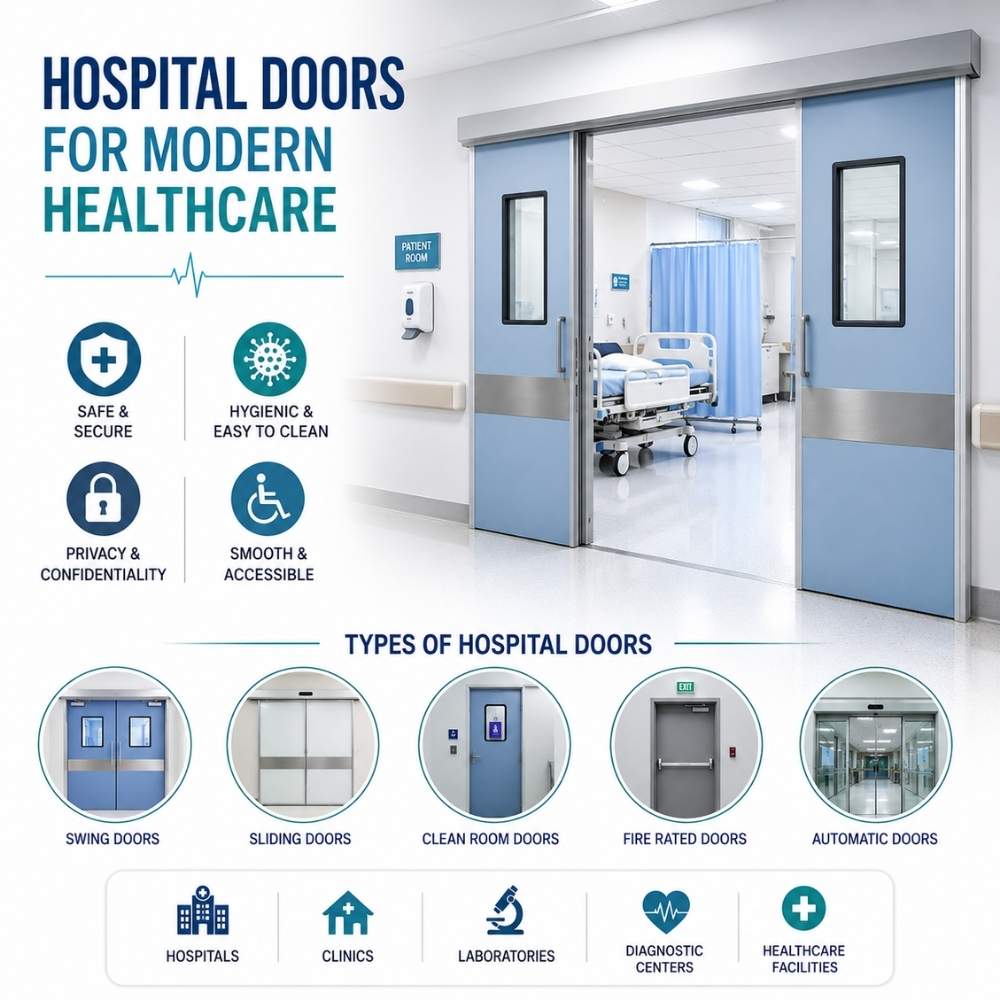
Healthcare facilities require more than advanced medical equipment and skilled professionals. They also depend on infrastructure that supports safety, hygiene, privacy, and efficient operations. Among the most important yet often overlooked elements are Hospital Doors. These specialized doors help create secure, clean, and functional healthcare environments while supporting smooth movement for patients, visitors, and medical staff.
Modern hospitals, clinics, diagnostic centers, laboratories, and healthcare facilities face increasing demands for infection control, patient privacy, accessibility, and operational efficiency. Therefore, selecting the right hospital door solutions becomes essential for maintaining high healthcare standards.
In this guide, we will explore the importance of hospital doors, their key features, types, and applications, and how leading door manufacturers in Ahmedabad provide innovative solutions for the healthcare industry.
Healthcare facilities require doors that support hygiene, safety, privacy, accessibility, and smooth daily operations. Hospital doors are specially designed to handle frequent use while meeting the demanding requirements of medical environments.
Hospital doors help healthcare facilities:
Doctors, nurses, patients, and support staff constantly move between different areas of a hospital. Therefore, reliable hospital doors help reduce delays and improve workflow. Automatic and easy-to-operate systems can also make patient and equipment movement faster and more convenient.
Safety and hygiene are essential in healthcare environments. High-quality hospital doors typically feature smooth, easy-to-clean surfaces, durable finishes, and hygienic construction. These features make regular cleaning and disinfection easier while supporting infection control.
During emergencies, quick access is critical. Wide openings, automatic operation, and durable construction allow medical teams to move patients, beds, and equipment efficiently. As a result, the right hospital doors can support both everyday healthcare operations and emergency response.
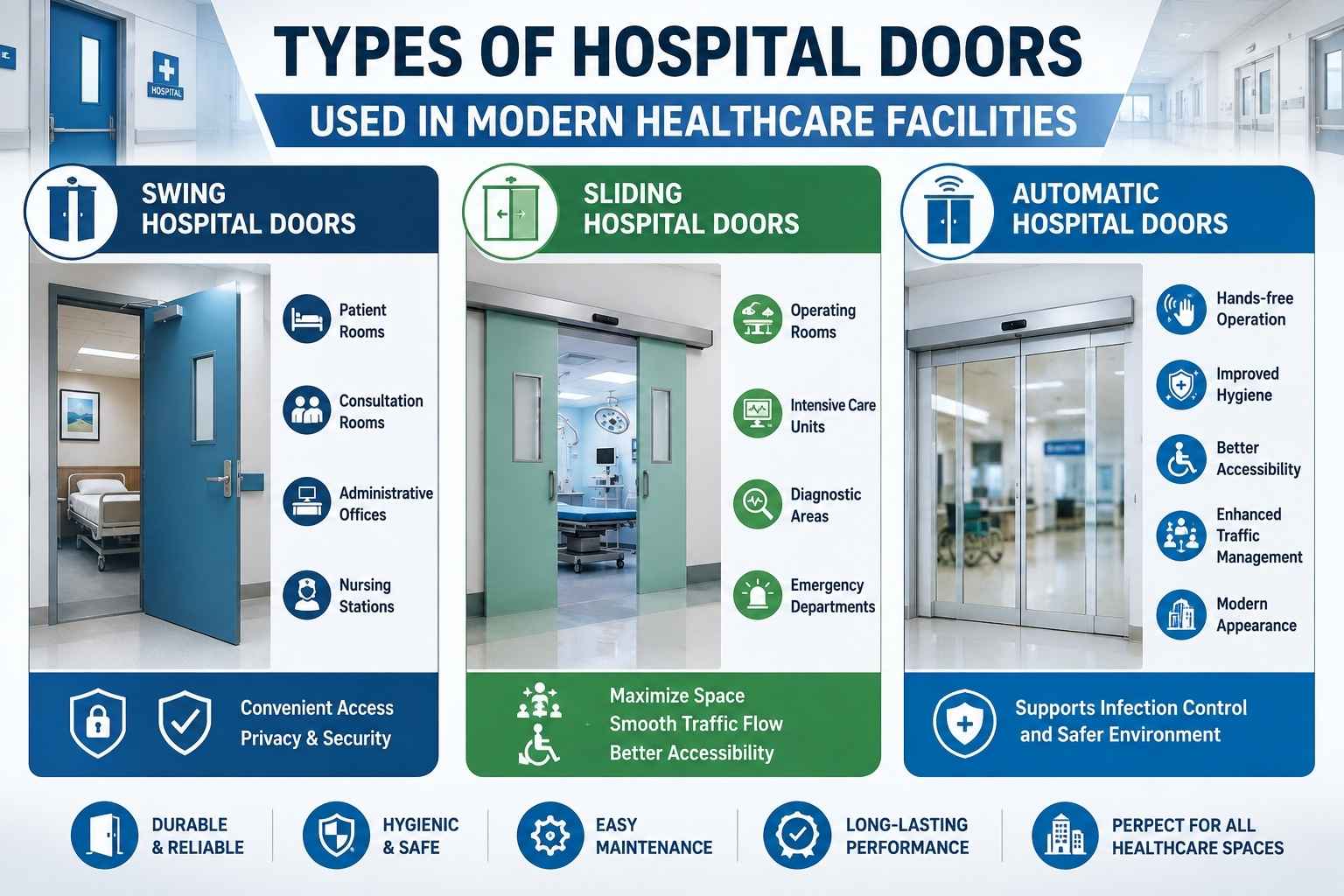
Different healthcare environments require different door solutions. Therefore, understanding available options helps facility managers make informed decisions.
Swing doors remain one of the most common healthcare door solutions. They offer reliable performance and easy operation.
Common applications include:
These doors provide convenient access while maintaining privacy and security.
Sliding doors maximize available space while supporting smooth traffic flow.
Healthcare facilities often use sliding doors in:
Furthermore, automated sliding systems improve accessibility for patients and staff.
Automation continues to transform healthcare infrastructure. Automatic hospital doors reduce physical contact and improve accessibility.
Benefits include:
As healthcare facilities prioritize infection control, automatic systems become increasingly valuable.
Patient privacy, noise control, and contamination prevention are important in healthcare facilities. Therefore, the right door systems help create safer, cleaner, and more comfortable medical environments.
Hospital doors provide private spaces for medical consultations and sensitive discussions. They help protect patient information while creating a more comfortable environment for communication between patients and healthcare professionals.
Excessive noise can affect patient comfort and recovery. Soundproof Doors help reduce corridor traffic, equipment noise, staff conversations, and external disturbances, creating a quieter healthcare environment.
Clean Room Doors are designed for areas that require strict contamination control. They typically feature smooth surfaces, airtight sealing, easy sanitation, and durable construction. These doors are commonly used in sterile processing areas, laboratories, pharmaceutical facilities, and surgical preparation rooms.
Choosing a reliable Clean Room Door Manufacturer helps healthcare facilities get customized designs, quality materials, precision engineering, and dependable long-term performance.
Healthcare facilities should evaluate several factors before choosing hospital doors.
Hospital doors experience constant use. Therefore, they must withstand heavy traffic without compromising performance.
Look for:
These features improve durability and reduce maintenance costs.
Healthcare environments require strict cleaning procedures.
Important hygiene features include:
Consequently, facilities can maintain cleaner environments more efficiently.
Healthcare facilities must remain accessible to all patients and visitors.
Therefore, hospital doors should support:
This approach improves convenience and regulatory compliance.
Trusted Door Manufacturers provide durable, reliable, and customized hospital door solutions designed for healthcare requirements.
Manufacturers can customize door sizes, materials, finishes, automation, and safety features according to specific hospital needs.
Professional manufacturers follow quality control standards to ensure consistent performance, durability, and reliability.
Experienced Door Manufacturers in Ahmedabad offer precision manufacturing, custom engineering, quality testing, and specialized healthcare door solutions.
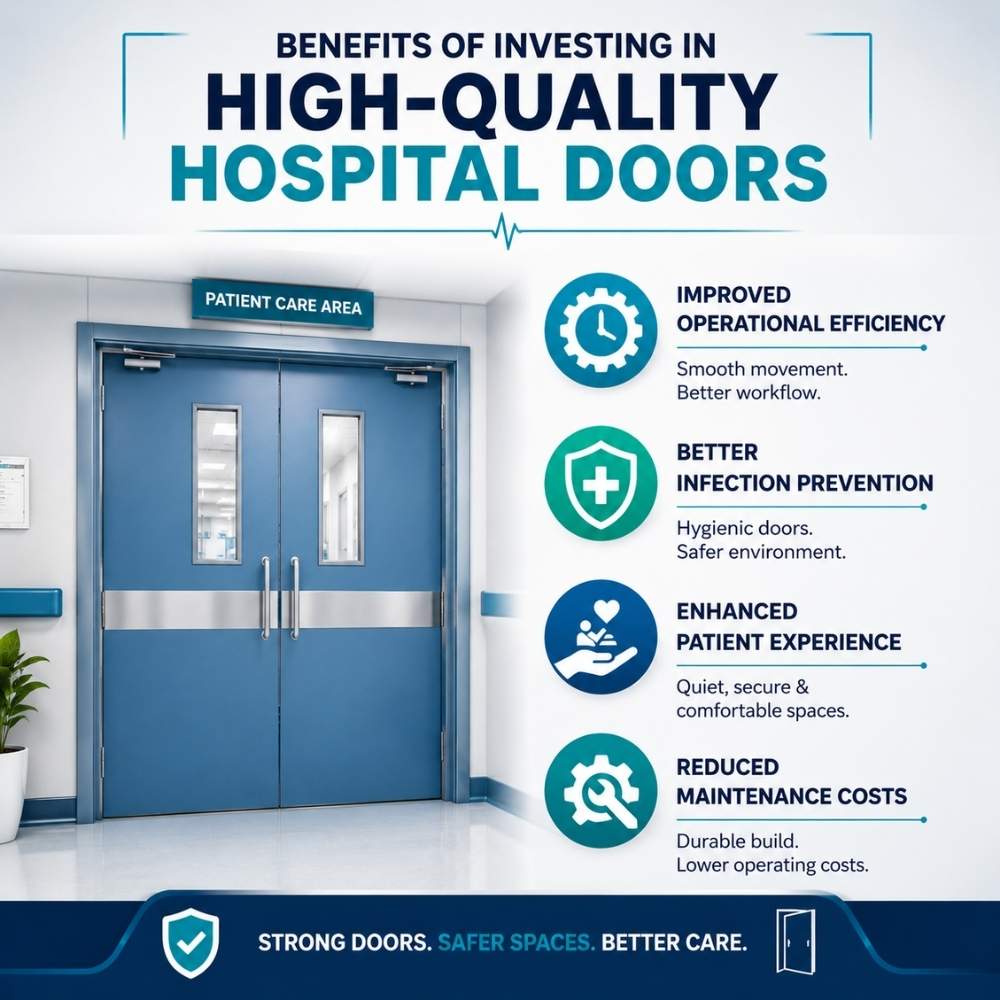
Choosing premium hospital doors delivers value beyond simple access control.
Efficient door systems support smooth movement throughout healthcare facilities.
Consequently, staff can perform their responsibilities more effectively while reducing delays.
Hygienic door solutions help support infection control strategies.
As a result, healthcare facilities can maintain safer environments for patients and staff.
Patients appreciate comfortable, quiet, and secure environments.
Therefore, quality hospital doors contribute to improved satisfaction and overall healthcare experiences
Durable materials and professional engineering reduce maintenance requirements over time.
As a result, healthcare facilities can lower operating expenses while improving reliability.
| Door Type | Main Purpose | Common Applications | Key Benefits |
|---|---|---|---|
| Hospital Doors | Safe and efficient movement | Patient rooms, wards, corridors, consultation rooms | Hygiene, durability, privacy and easy access |
| Soundproof Doors | Reduce unwanted noise | Patient rooms, consultation rooms, ICU areas, testing rooms | Better privacy, quieter surroundings and patient comfort |
| Clean Room Doors | Maintain controlled environments | Laboratories, sterile areas, pharmaceutical spaces and operating areas | Better contamination control, easy cleaning and airtight sealing |
| Automatic Hospital Doors | Provide touchless access | Emergency areas, operating rooms, entrances and high traffic zones | Hands free operation, accessibility and smoother movement |
| Sliding Hospital Doors | Save space and improve movement | ICU, operating rooms, diagnostic areas and corridors | Space saving design, convenient access and efficient traffic flow |
The best material depends on the room’s use. Hospitals often choose durable, easy-clean materials that resist moisture, impact, and repeated cleaning.
Yes, sliding doors can be useful where space is limited or where beds and trolleys need easier movement through wider openings.
Vision panels improve visibility before opening a door. They can help prevent collisions and allow safer observation of activity inside specific rooms.
Yes, doors can be planned according to room dimensions, equipment movement, wheelchair access, and the functional needs of each department.
Often, yes. Compatible frames and sealed joints help support a smooth finish and the controlled conditions required within the room.
They are commonly used in consultation rooms, recovery spaces, therapy rooms, meeting rooms, and other areas requiring greater privacy.
No FAQ found.
Routine checks should be part of the facility maintenance plan. Hinges, closers, locks, and seals should be inspected before problems affect operations.
Yes, smooth, easy-to-clean surfaces and well-designed edges can support regular cleaning and hygiene procedures within healthcare environments.
Automatic doors can improve accessibility and reduce contact points in busy entrances, corridors, and areas used by patients with mobility challenges.
Important factors include visibility, privacy, easy access for staff, equipment movement, cleaning needs, and the room’s specific clinical requirements.
Yes, accurate alignment, sealing, and hardware fitting are essential, especially for doors used in controlled, acoustic, or high-traffic areas.
An experienced supplier may provide multiple door solutions, but every department should still receive a design appropriate to its individual use.
No FAQ found.
Healthcare infrastructure continues to evolve. Therefore, hospital doors are becoming smarter and more efficient.
Emerging Innovations Include
As technology advances, healthcare facilities will continue adopting innovative solutions that improve patient care and operational performance.
Hospital doors play a vital role in modern healthcare facilities. They support safety, hygiene, privacy, accessibility, and operational efficiency while helping healthcare providers deliver exceptional patient care.
Whether a facility requires standard healthcare doors, advanced Soundproof Doors, specialized Clean Room Doors, or customized solutions from a trusted Clean Room Door Manufacturer, selecting the right products is essential for long-term success.
By partnering with experienced Door Manufacturers and reputable Door Manufacturers in Ahmedabad, healthcare organizations can invest in reliable door systems that meet the highest standards of quality, performance, and durability.
As healthcare environments continue to evolve, modern hospital doors will remain a critical component in creating safer, cleaner, and more efficient facilities for patients, staff, and visitors alike.
WhatsApp us
 Hospital Doors
Comments are closed