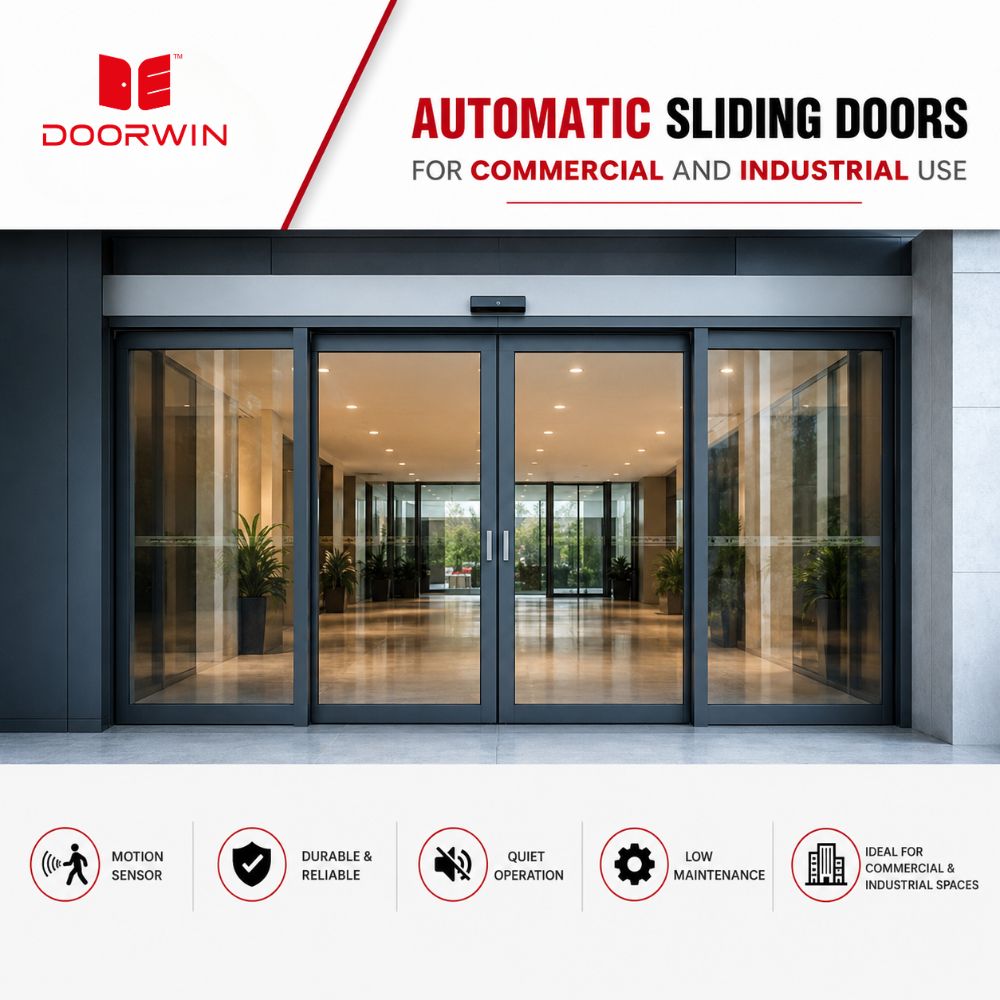
Automatic Sliding Doors are sensor-operated doors that open and close automatically when they detect movement. They improve accessibility, convenience, and safety in commercial and industrial buildings.
Modern buildings demand more than just functional entrances. Today, businesses, industrial facilities, healthcare centers, hotels, airports, and commercial complexes require entrance systems that improve accessibility, enhance safety, and create a professional first impression. As a result, Automatic Sliding Doors have become one of the most preferred entrance solutions across various industries.
Unlike conventional doors, automatic systems provide seamless access while reducing physical effort and improving traffic flow. Moreover, they help businesses maintain hygiene standards, optimize energy efficiency, and deliver a better user experience. Whether installed in a busy shopping mall, a manufacturing facility, or a corporate office, these advanced door systems contribute significantly to operational efficiency and customer satisfaction.
As technology continues to evolve, building owners are increasingly investing in smart entrance solutions. Consequently, automatic door systems are no longer considered a luxury feature. Instead, they have become an essential component of modern infrastructure.
Automatic Sliding Doors are sensor-operated entrance systems that open and close automatically when they detect approaching individuals, vehicles, or equipment. These doors use advanced sensors, motion detectors, control units, and drive mechanisms to ensure smooth and reliable operation.
Unlike manually operated doors, automatic systems eliminate the need for physical contact. Therefore, they provide a convenient, hygienic, and efficient solution for locations with high foot traffic.
The operation of automatic doors involves several integrated components working together.
Sensors continuously monitor the entrance area. When movement is detected, the system sends a signal to activate the door mechanism.
The control unit acts as the brain of the system. It receives signals from sensors and instructs the motor to open or close the door accordingly.
Modern systems include safety sensors that prevent accidental closing when people or objects remain in the doorway.
Many advanced systems now integrate with access control, security management, and building automation platforms to provide enhanced functionality and monitoring.
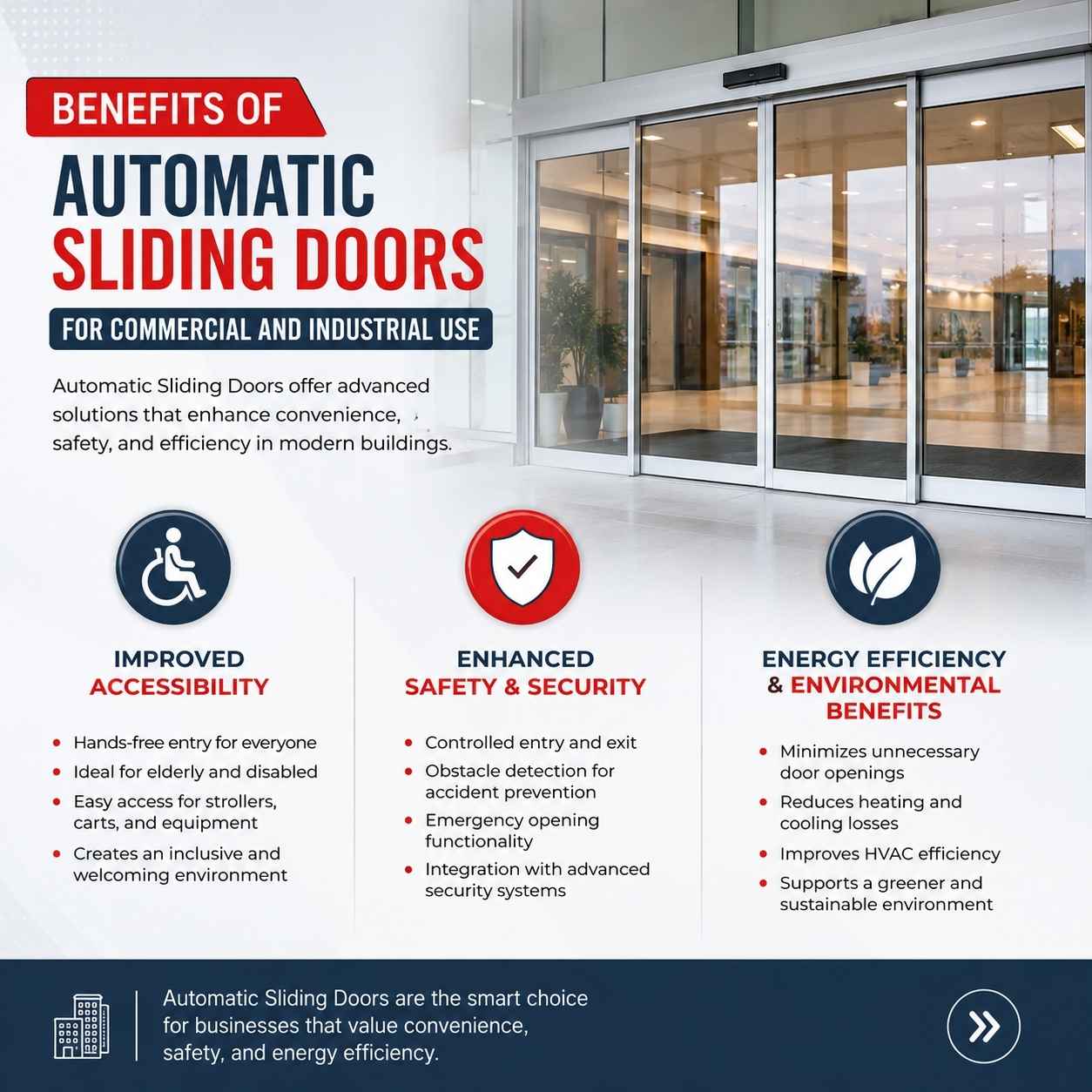
Businesses increasingly choose Automatic Sliding Doors because they offer numerous operational and practical advantages.
Accessibility plays a vital role in modern building design. Automatic entrance systems allow people to enter and exit effortlessly without touching the doors.
This feature benefits:
As a result, businesses create a more inclusive and welcoming environment.
Safety remains a top priority for commercial and industrial facilities. Automatic door systems help improve security while maintaining smooth access.
Key safety benefits include:
Furthermore, many systems can be linked with surveillance and access control technologies for additional protection.
Energy efficiency has become an important factor for building owners. Automatic entrance systems help maintain indoor temperatures by minimizing unnecessary door openings.
Consequently, facilities experience:
Over time, these advantages contribute to substantial cost savings.
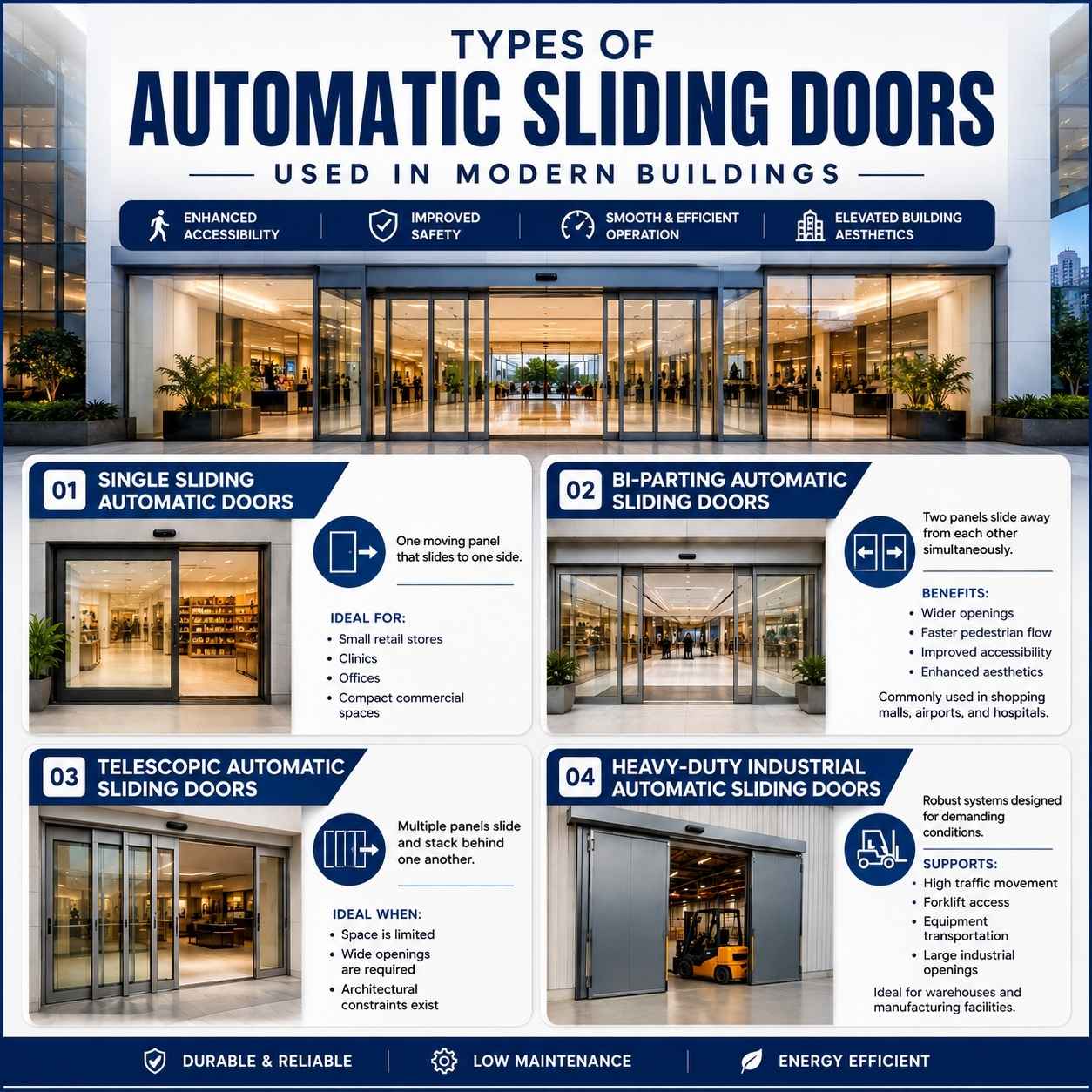
Different facilities require different entrance solutions. Therefore, manufacturers offer several types of Automatic Sliding Doors designed to meet specific operational requirements.
Single sliding systems consist of one moving panel that slides to one side.
These doors are ideal for:
Bi-parting systems feature two panels that slide away from each other simultaneously.
These doors provide:
Therefore, they are commonly used in shopping malls, airports, and hospitals.
Telescopic doors use multiple panels that slide and stack behind one another.
They are particularly useful where:
Industrial environments often require robust entrance systems capable of handling demanding conditions.
These doors support:
Consequently, warehouses and manufacturing facilities frequently rely on heavy-duty automatic systems.
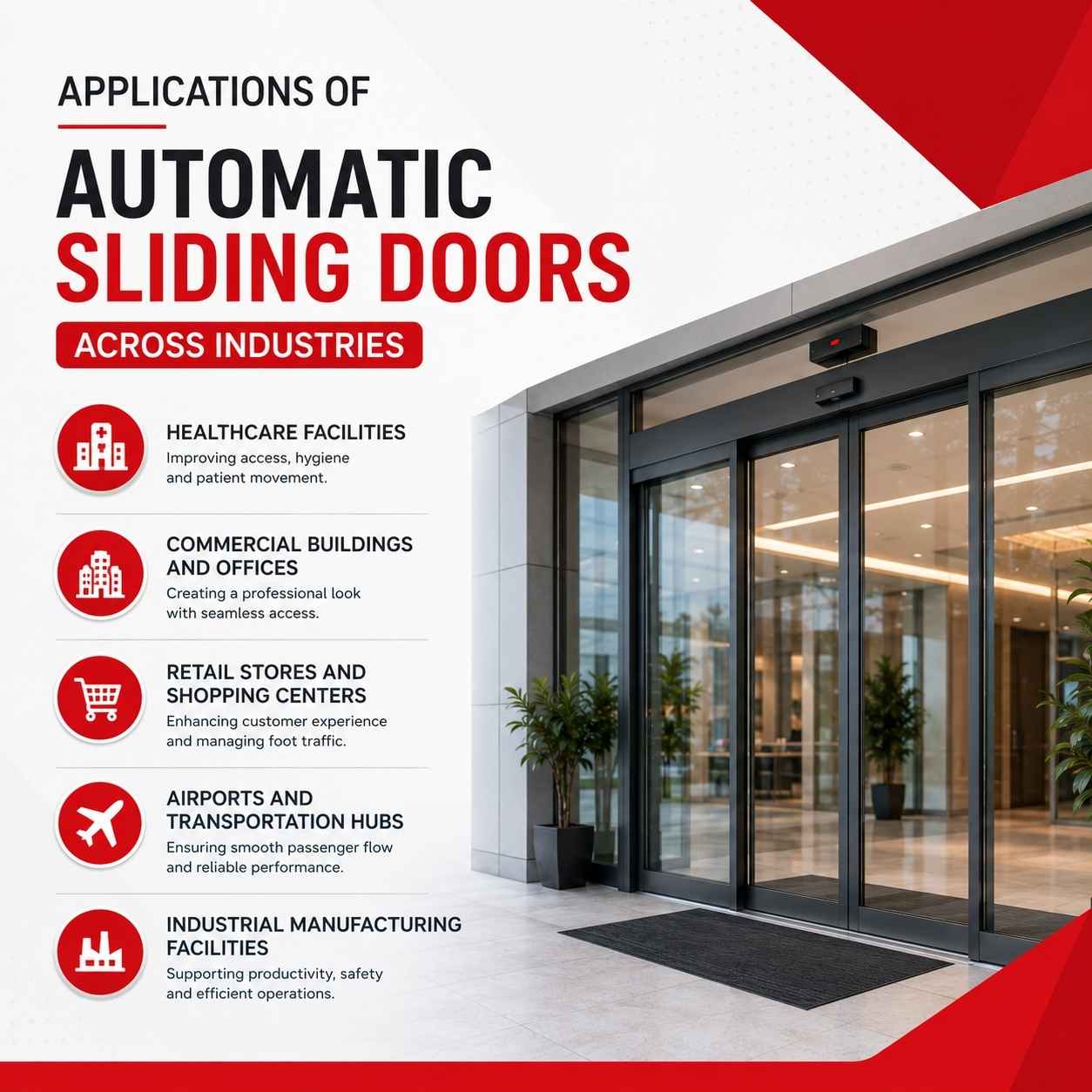
The versatility of Automatic Sliding Doors makes them suitable for numerous sectors.
Hospitals and healthcare centers prioritize hygiene, accessibility, and smooth movement.
Automatic systems help by:
Moreover, they enhance operational efficiency in critical healthcare settings.
Corporate facilities use automated entrances to create a professional image while improving employee and visitor experiences.
Benefits include:
Retail environments depend on customer convenience. Automatic doors encourage easy access and improve traffic management.
Additionally, they help maintain indoor climate control throughout the day.
Transportation facilities require reliable entrance systems capable of managing thousands of users daily.
Automatic solutions provide:
Manufacturing plants often handle large equipment and frequent material movement.
Automatic entrance systems support:
Organizations continuously seek solutions that improve both customer experience and operational performance.
Customers appreciate convenient entrances that open automatically without physical effort.
As a result, businesses create a more positive first impression.
Modern entrance systems contribute significantly to a building’s visual appeal.
Consequently, businesses project an image of innovation, efficiency, and professionalism.
High-quality systems are designed for durability and long-term performance.
With proper maintenance, businesses can enjoy years of reliable operation while minimizing repair costs.
Although initial installation requires investment, automatic systems often generate savings through:
Therefore, they deliver excellent long-term value.
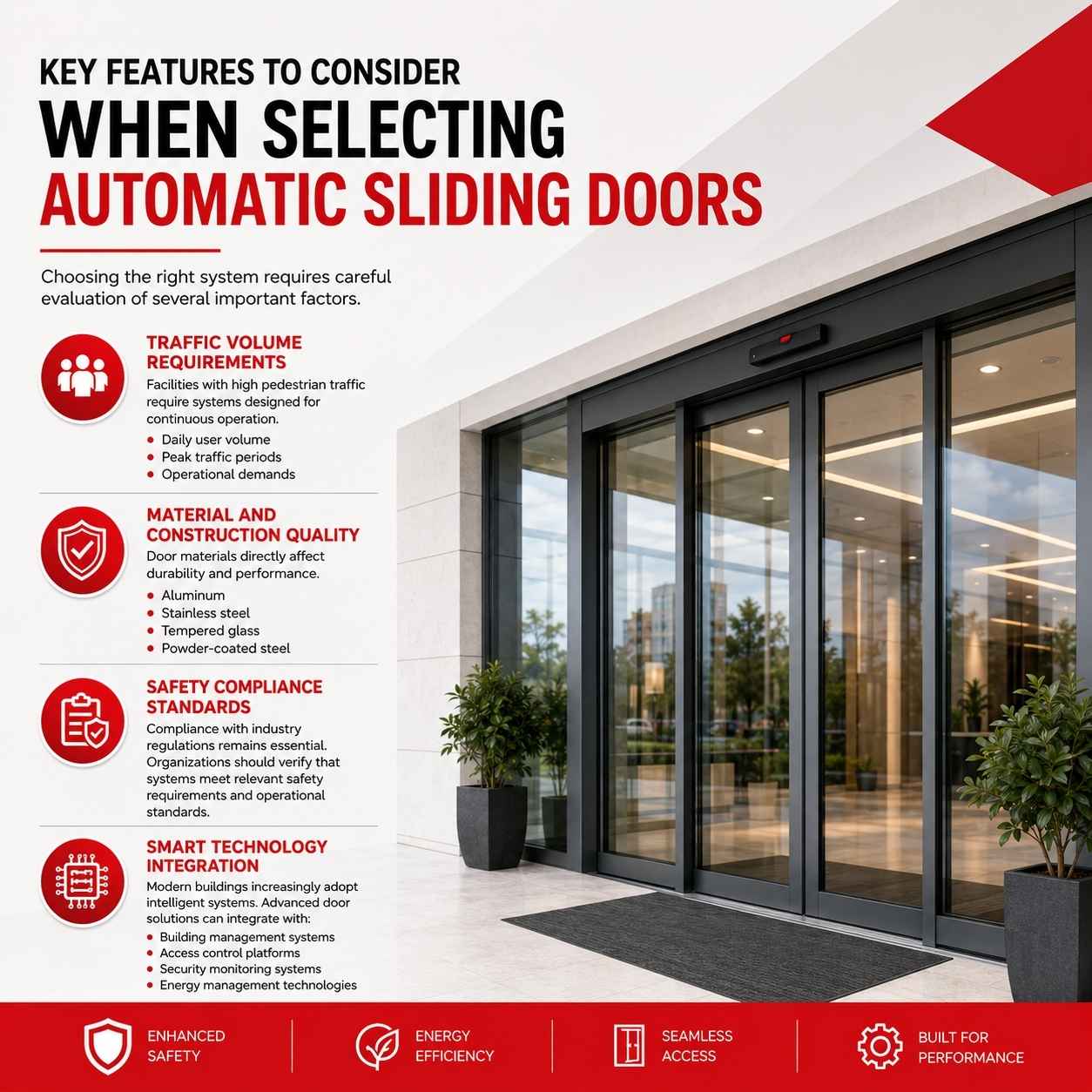
Choosing the right system requires careful evaluation of several important factors.
Facilities with high pedestrian traffic require systems designed for continuous operation.
Businesses should evaluate:
Door materials directly affect durability and performance.
Common materials include:
Compliance with industry regulations remains essential.
Organizations should verify that systems meet relevant safety requirements and operational standards.
Modern buildings increasingly adopt intelligent systems.
Advanced door solutions can integrate with:
Professional installation significantly affects long-term performance.
A detailed site evaluation helps identify:
Experienced technicians ensure proper alignment, calibration, and system testing.
As a result, businesses achieve optimal performance from the beginning.
Before commissioning, installers should verify:
Comprehensive testing reduces future operational issues.
| Feature | Automatic Sliding Doors | Traditional Doors |
|---|---|---|
| Operation | Sensor-based automatic opening | Manual operation |
| Accessibility | Hands-free access | Physical contact required |
| Safety | Advanced safety sensors | Basic safety features |
| Energy Efficiency | Reduces air loss | Higher energy loss |
| Traffic Flow | Ideal for high-traffic areas | Slower movement |
| Hygiene | Contactless entry | Frequent touching |
| Best Use | Commercial & Industrial Buildings | Residential & Low-Traffic Areas |
“Compared to traditional doors, Automatic Sliding Doors offer better accessibility, improved safety, and greater energy efficiency. Therefore, they are increasingly preferred in commercial and industrial environments.”
Regular maintenance extends system lifespan and improves reliability.
Dust and debris can affect sensor performance and track movement.
Therefore, routine cleaning should be scheduled consistently.
Regular sensor checks ensure accurate detection and safe operation.
Motors, rollers, belts, and tracks should receive periodic inspections to prevent unexpected failures.
Safety features must remain fully operational at all times.
Regular testing helps maintain compliance and protect users.
The future of entrance automation continues to evolve rapidly.
Artificial intelligence is improving operational efficiency through predictive maintenance and intelligent traffic management.
Touchless technologies continue gaining popularity due to increased hygiene awareness.
Manufacturers are developing smarter systems that further reduce energy consumption.
Automatic entrance systems increasingly communicate with broader building automation platforms to enhance overall facility management.
Automatic Sliding Doors are sensor-operated doors that open and close automatically when they detect movement. They improve accessibility, convenience, and safety in commercial and industrial buildings.
Automatic Sliding Doors are widely used in hospitals, shopping malls, airports, hotels, office buildings, retail stores, and industrial facilities where smooth and efficient access is required.
These doors use motion sensors, control systems, and electric motors to detect approaching individuals and automatically slide open and closed without manual operation.
Yes. Automatic Sliding Doors help reduce heat loss and maintain indoor temperatures by opening only when needed, which can lower heating and cooling costs.
Key benefits include hands-free operation, improved accessibility, enhanced safety, energy efficiency, better traffic flow, and a modern professional appearance.
No FAQ found.
Yes. Modern Automatic Sliding Doors include safety sensors and obstacle detection systems that help prevent accidents and ensure smooth operation in busy environments.
Yes. Automatic Sliding Doors are available in various sizes, designs, materials, and configurations to meet the requirements of commercial, industrial, healthcare, and retail facilities.
Regular maintenance typically includes cleaning tracks, inspecting sensors, checking motors, and testing safety systems to ensure reliable long-term performance.
Common options include single sliding doors, bi-parting sliding doors, telescopic sliding doors, curved sliding doors, and heavy-duty industrial automatic sliding doors.
Businesses benefit from improved customer experience, increased accessibility, enhanced building aesthetics, better energy efficiency, and long-term operational savings.
No FAQ found.
Automatic Sliding Doors have transformed how commercial and industrial facilities manage accessibility, safety, efficiency, and customer experience. Their ability to provide seamless operation, reduce energy consumption, improve security, and support modern building requirements makes them an essential investment for today’s businesses. Having the right entrance system is absolutely essential to enhance the security and efficiency of any commercial or industrial space.
From healthcare facilities and retail centers to airports and manufacturing plants, these automated entrance solutions continue to play a critical role in enhancing operational performance. Furthermore, advancements in smart technology, AI integration, and touchless access are making these systems even more valuable for modern infrastructure. Doorwin Engineering provides you with the perfect combination of premium quality, durability, and advanced technology to meet these growing structural demands.
Organizations seeking a reliable, efficient, and future-ready entrance solution can benefit significantly from implementing high-quality automated doors. By choosing the right setup, ensuring professional installation, and following proper maintenance practices, businesses can enjoy long-term performance, improved accessibility, and a superior user experience. If you are looking to install low-maintenance and long-lasting solutions for your business facility, get in touch with our expert team today.

WhatsApp us
Comments are closed