
Noise pollution has become one of the biggest challenges in modern residential, commercial, and industrial spaces. Whether it is traffic noise, machinery vibrations, office distractions, or loud environments, excessive sound can negatively affect productivity, comfort, concentration, and privacy. As a result, more businesses and property owners are investing in high-quality Soundproof Doors to create quieter and more comfortable spaces.
However, choosing the right acoustic door is not as simple as selecting a standard door design. Different environments require different levels of sound insulation, durability, safety, and performance. Therefore, understanding the important factors before purchasing becomes essential.
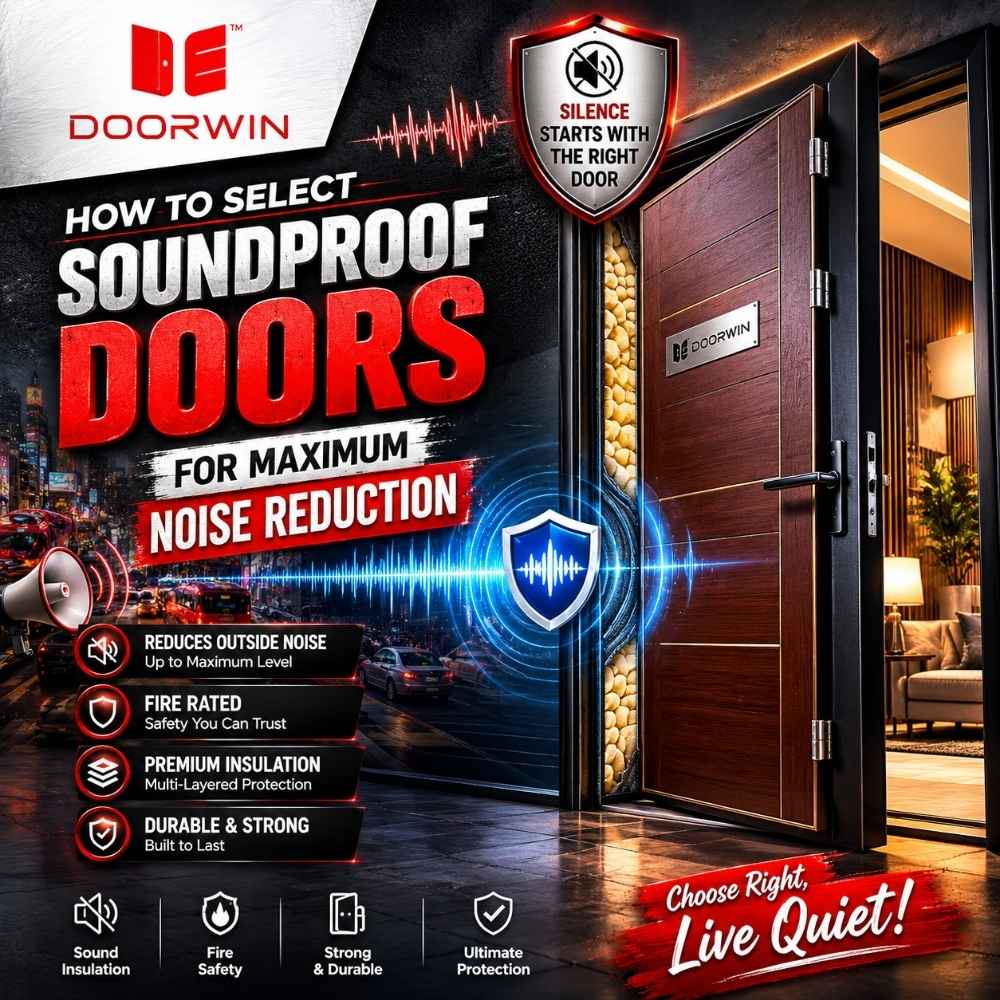
This detailed guide explains how to select the best soundproof doors for maximum noise reduction while improving energy efficiency, privacy, and long-term functionality.
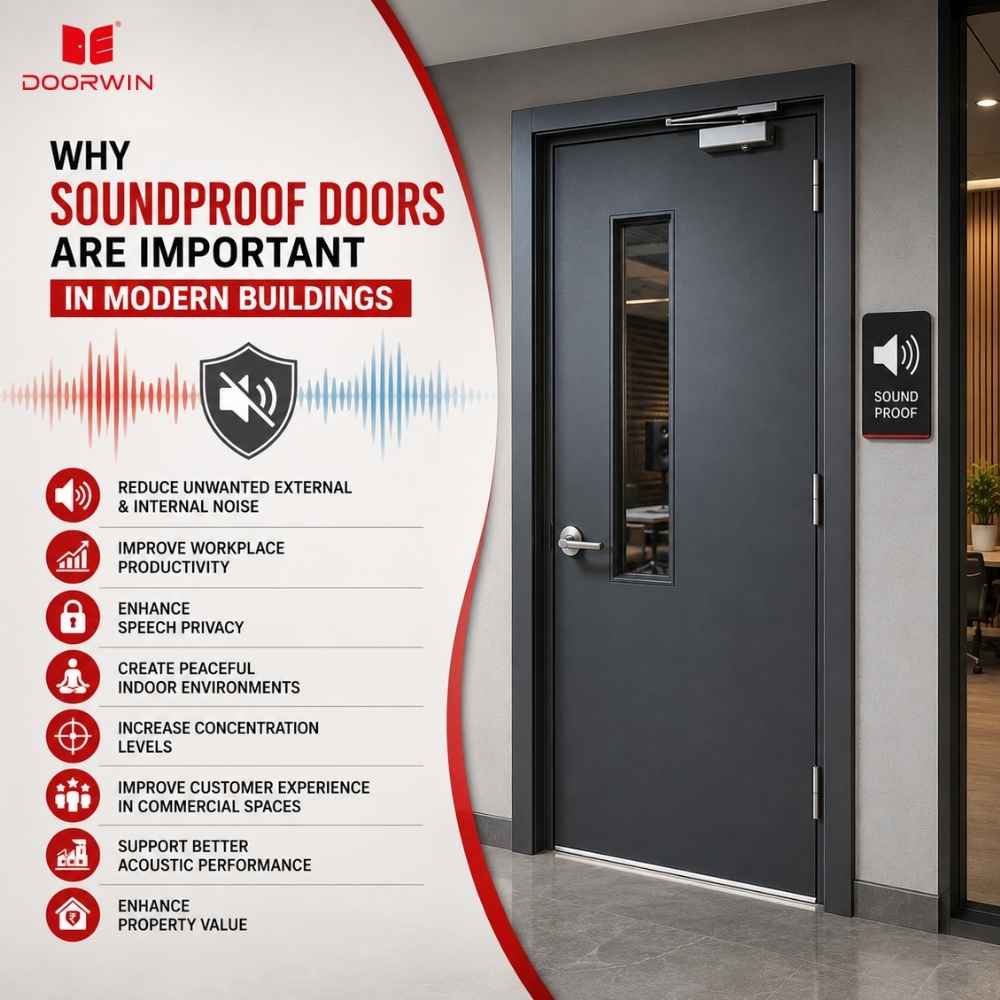
Modern infrastructure focuses heavily on comfort, privacy, and performance. Traditional doors often allow unwanted sound to pass through gaps, weak materials, and poor sealing systems. In contrast, soundproof doors are specifically designed to reduce sound transmission between spaces.
Industries, offices, hospitals, hotels, studios, and educational institutions now depend on acoustic door systems to maintain controlled environments. Additionally, growing urbanization has increased external noise levels, making noise control solutions more important than ever.
Major Benefits of Soundproof Doors
Because of these advantages, soundproof doors have become an essential component of modern architecture.
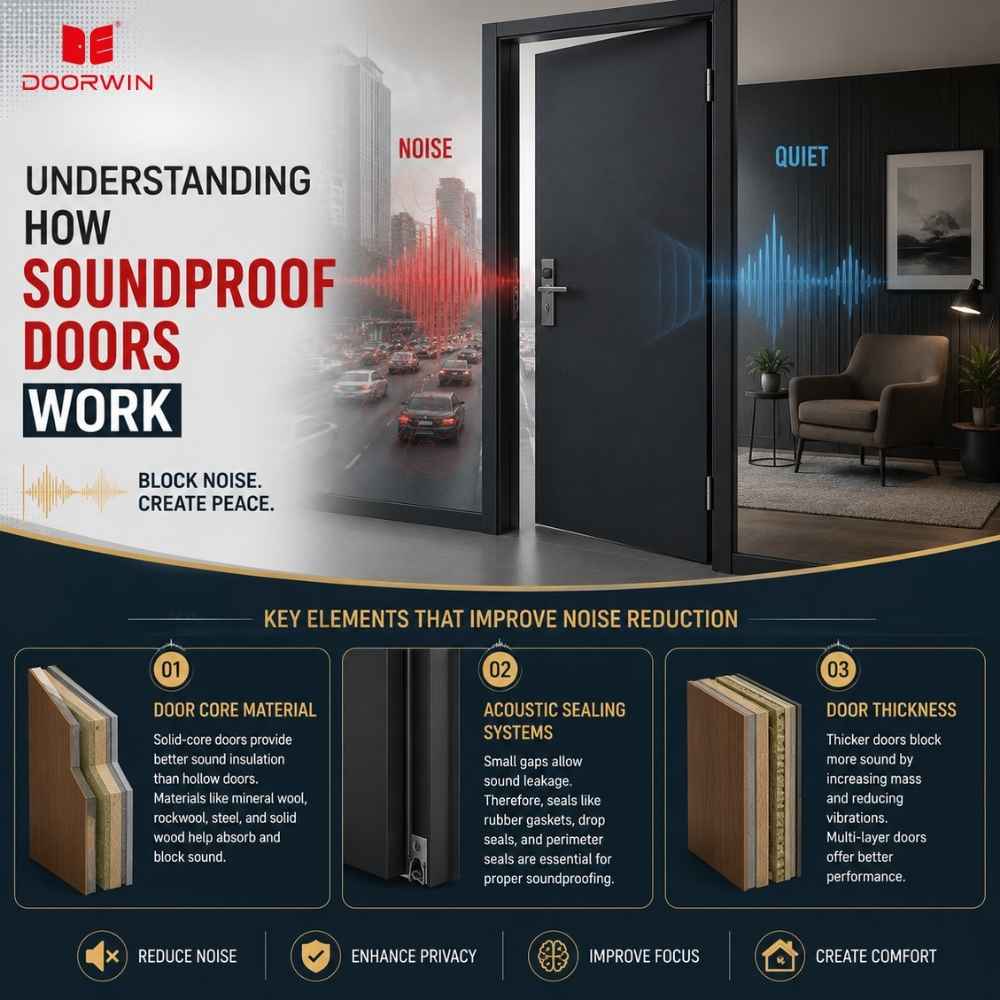
Sound travels through air vibrations and easily passes through weak surfaces like hollow or thin doors. However, soundproof doors are designed with dense materials, insulated cores, and tight sealing to block and reduce noise effectively.
Key Elements That Improve Noise Reduction
Solid-core doors provide better sound insulation than hollow doors. Materials like mineral wool, rockwool, steel, and solid wood help absorb and block sound.
Small gaps allow sound leakage. Therefore, seals like rubber gaskets, drop seals, and perimeter seals are essential for proper soundproofing.
Thicker doors block more sound by increasing mass and reducing vibrations. Multi-layer doors offer better performance.
Choosing the right solution requires careful planning. Different applications demand different acoustic ratings and structural designs.
Determine the Required Noise Reduction Level
The first step is identifying how much sound reduction your environment needs.
These spaces require moderate sound control:
These environments require stronger acoustic performance:
These applications demand advanced soundproof doors:
Selecting the correct performance level prevents unnecessary costs while ensuring proper sound insulation.
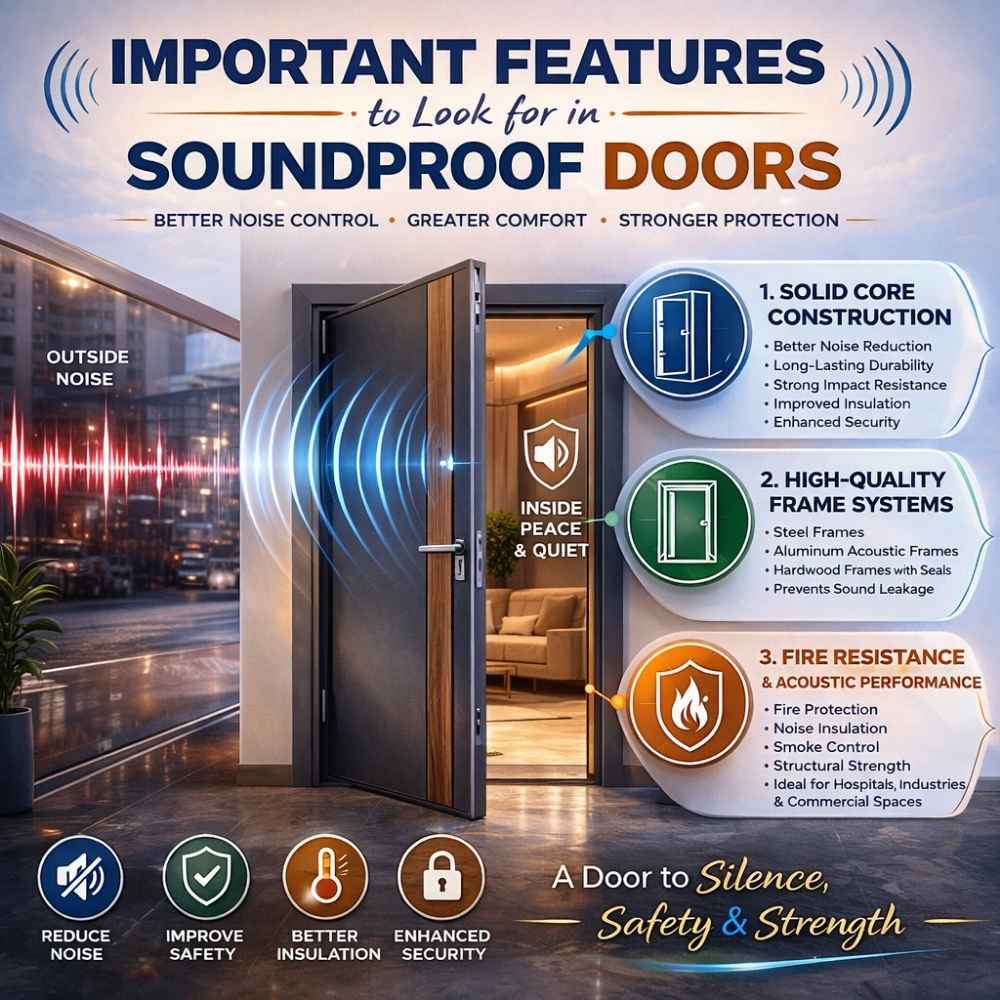
Solid-core doors offer better sound insulation than hollow doors. They reduce vibrations and increase strength.
Benefits:
A strong frame is essential for effective soundproofing. Poor frames allow sound leakage.
Recommended materials:
Many soundproof doors also offer fire resistance. These doors provide:
They are ideal for hospitals, industries, and commercial spaces.
Hospitals need quiet spaces for patient care and privacy.
Applications:
Offices require focus and confidentiality.
Applications:
Factories produce high noise levels.
Benefits:
Proper maintenance keeps soundproof doors functioning efficiently for years.
Inspect acoustic seals regularly for damage or wear.
Healthy seals maintain strong acoustic performance.
Use non-abrasive cleaning materials to protect acoustic finishes and sealing systems.
Avoid excessive moisture exposure in wooden acoustic doors.
The acoustic door industry continues evolving rapidly.
Modern systems now include:
These innovations improve both convenience and performance.
Sustainable construction practices are driving demand for environmentally friendly acoustic materials.
Manufacturers increasingly use:
This trend supports green building standards worldwide.
Professional manufacturers offer customized solutions based on application requirements.
Key Advantages
Experts recommend the correct STC ratings and materials.
Different projects require unique acoustic specifications.
Trusted manufacturers provide tested acoustic performance ratings.
High-quality products reduce maintenance and replacement costs.
Choosing an experienced manufacturer ensures better overall results.
 Final Thoughts:
Selecting the right Soundproof Doors requires more than simply choosing a thick door panel. Buyers must carefully evaluate acoustic ratings, sealing systems, core materials, frame quality, fire resistance, and installation standards.
The right soundproof door improves privacy, productivity, comfort, and long-term operational efficiency. Whether for offices, hospitals, industrial facilities, hotels, or recording studios, high-performance acoustic doors create quieter and more professional environments.
As modern buildings continue prioritizing noise control and occupant comfort, the demand for advanced soundproof door solutions will continue growing. Therefore, investing in professionally engineered acoustic doors remains a smart and future-ready decision for every industry.
For more information, contact Doorwin Engineering today and explore high-performance soundproof doors designed for modern industrial, commercial, and residential spaces!
WhatsApp us
 Soundproof Doors
Comments are closed